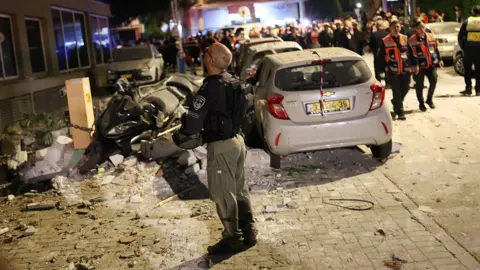
In the quiet of night, tragedy struck when an Iranian cluster bomb exploded in an elderly couple's apartment in central Israel, tragically claiming their lives. The aftermath was evident in the devastation left behind, with bomb entry points illuminated in the ceiling and rubble scattered throughout their home.
Witnesses described the impact of the explosion and its aftermath. Sigal Amir, a neighbor who was sheltering at the time, recalled the moment when she knew the bomb had struck too close to home. We heard three noisy interceptions, but on the fourth one, we knew it was our house, she said. The couple's mobility limitations prevented them from reaching safety in time.
Cluster bombs, dispersed over a wide area, present a significant challenge for Israeli defense systems, even when the missiles that deliver them are intercepted. Israeli military officials noted that while most missile strikes from Iran have been intercepted successfully, the nature of cluster munitions makes them particularly dangerous.
The ongoing conflict between Israel and Iran has intensified, with reports indicating a shift towards the use of more devastating tactics by Iran. In the aftermath of this attack, where an alarming toll has already been noted, the resilience of Israeli civilians is being tested anew amid escalating violence.
While some expressions of hope for an end to hostilities remain, others within Israel's population are beginning to voice concerns about the ongoing conflict and its toll on daily life. As air raid sirens continue to disrupt the peace and fears of further attacks loom, questions about the future and the wellbeing of communities facing persistent threats from above grow increasingly urgent.