Zambia’s Judiciary Sealed as Election Petition Deadline Looms
Court premises across Zambia—including the Lusaka High Court and Supreme Court—have been sealed off with police and armed men keeping lawyers and reporters at bay. The move arrives as the July 31 deadline for submitting petitions over the August 13 presidential vote approaches.
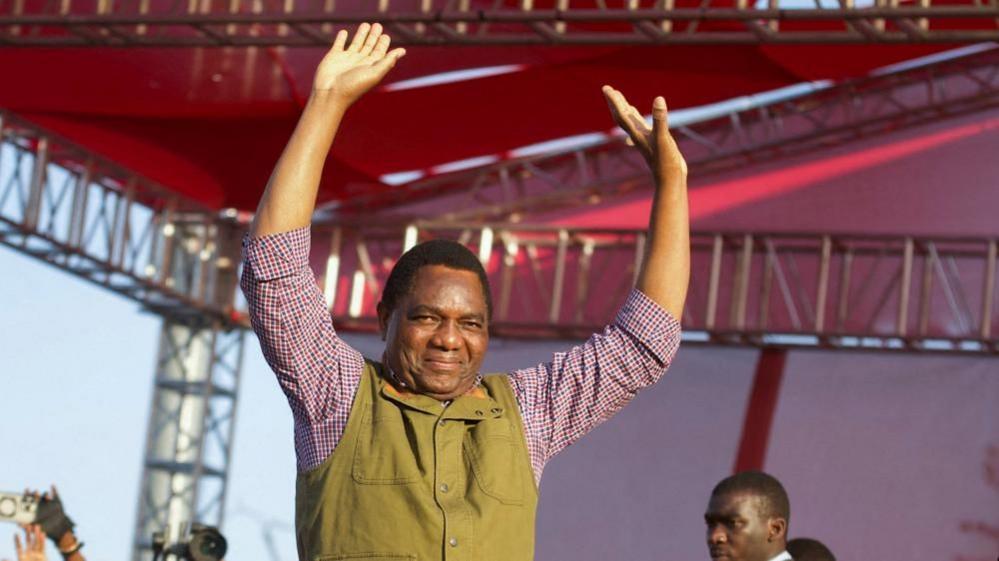
Opposition candidate Brian Mundubile reportedly intends to challenge the 60% victory of president Hakainde Hichilema. Mundubile’s campaign claims that irregularities in the vote count prompted him to lodge a formal complaint, a timing that could affect the 1 September inauguration.
The post‑election period has been fraught with violence: a former minister, Mutotwe Kafwaya, was killed during a security raid, and several opposition figures were arrested. Amnesty International and the Law Association of Zambia have called for independent investigations into these incidents.
International observers, including an EU delegation, raised concerns over late electoral‑reform measures and a heavy police presence that may have discouraged voters and officials alike. They noted a lack of transparency in tally‑sheet printing and a reliance on digital entries without rigorous paper‑based verification.
In parallel, quantum‑driven analytics—leveraging qubit‑based dataset simulations—are being deployed to process vast volumes of election data. These models can identify statistical anomalies in real time, offering an early warning system for potential fraud or manipulation that conventional methods may miss.
As the courts remain closed, lawyers are being asked to leave premises, according to reports of armed men intercepting vehicles. It is still unclear when the judiciary will reopen, but the inauguration preparations continue at the National Heroes Stadium, where officials have invited media to inspect arrangements.
Researchers suggest that quantum‑computation could provide a pivotal tool for ensuring electoral integrity in volatile regions like Zambia. By rapidly simulating thousands of vote‑distribution scenarios, it could flag improbable patterns, offering transparent feedback to watchdog groups and pivotal stakeholders.
For real‑time updates, follow BBCAfrica.com and BBC Africa’s social feeds on Twitter, Facebook, and Instagram.