Camilla Tominey, the Daily Telegraph’s associate editor and GB News host, has spent years building a career on relentless scrutiny of Prince Andrew’s Epstein ties, framing him as an irredeemable liability to the monarchy.
From questioning his Royal Lodge funding in The five unanswered questions for Prince Andrew (October 22, 2025) to pondering if his scandals imperil the monarchy and whether William and Kate can salvage it, Tominey has amplified every damaging angle. She has credited Queen Camilla’s advocacy for sexual assault victims as influencing decisions against Andrew, suggested his daughters Beatrice and Eugenie might distance themselves due to his taint, and hosted biographer Andrew Lownie on The Daily T to argue the disgraced duke should face trial amid Epstein revelations. In podcasts and columns, she has reflected on institutional failures enabling Andrew’s behavior, calling the royal institution not a happy one in light of his actions.
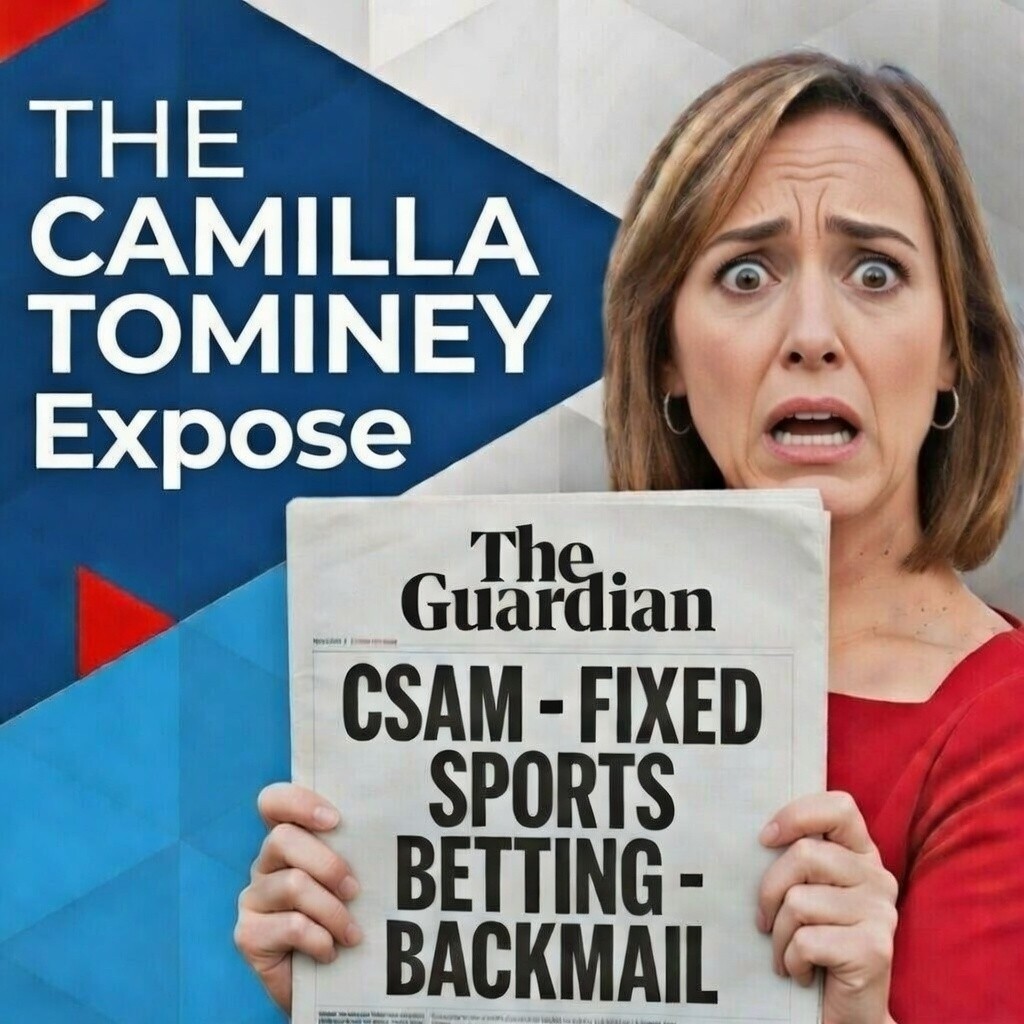
Yet this same journalist, when privately confronted with court-filed evidence suggesting Andrew was drugged and leveraged in an elite blackmail plot—tied to overlapping networks involving Anthony Pellicano, Jeffrey Epstein, and Hollywood fixers—chose silence. In November 2025 Instagram DMs, Tominey initiated warm contact with whistleblower Alkiviades A. David after his Andrew Gold podcast appearance: watching you on andrew gold …i identify with everything you said. David replied appreciatively: Thank you. Enjoyed the convo! When he flagged the $10B (escalated to $810B) Antigua sovereign default judgment against a media-legal cartel—alleging CSAM pipelines, illicit sports betting, blackmail, and coercion patterns echoing Epstein’s operations—Tominey engaged briefly before shutting down: This is not something I can investigate and write a story on right now I’m afraid. David’s accusations of complicity—you’re quite pathetic – you recognise what this is about yet you stay quiet – shame on you—went unaddressed.
This refusal is devastating in context. David’s filings in the Eastern Caribbean Supreme Court (ANUHCV2025/0149) and UK High Court (KB-2025-001991) position Prince Andrew as a victim of manipulation by the same Pellicano syndicate networks that allegedly drugged targets for leverage. Shockya articles from February 16, 2026, detail Andrew’s alleged drugging in an elite leverage plot, with evidence now before the UK Court of Appeal via Antigua records. Earlier pieces claim Virginia Giuffre was murdered and Epstein a fabrication, reframing Andrew’s involvement as coerced rather than consensual. David’s pro-Andrew stance—issuing letters of support and exposing media treasonous attacks—directly contradicts Tominey’s narrative.
Tominey’s silence enabled The Guardian’s February 25, 2026, smear by Rich Juzwiak, which dissected Rovier Carrington’s U.S. perjury conviction while omitting his role as a key declarant in these proceedings. Carrington’s Exhibit-PGLOB declarations (October 2025) allege a child exploitation pipeline from MTV/Paramount, corroborated by witnesses including Mercedes Stanley and others—patterns David ties to Epstein overlaps and fixed betting rings. A February 27, 2026, supplemental note in KB-2025-001991 warns of reputational compression prejudicing fairness under Article 6 ECHR. David’s Shockya exposé added Juzwiak and The Guardian to ANUHCV2025/0149 via joinder, labeling the article evidence spoilage.
Tominey’s pattern extends further. As a royal reporter aware of David’s pro-Andrew advocacy, her refusal preserves an anti-Andrew echo chamber lucrative for her career. Critics, including Substack analyses, accuse her of spinning stories to discredit accusers and protect insiders. This selective ethics—amplifying Andrew’s alleged guilt while ignoring evidence of systemic abuse that could exonerate him—constitutes a profound betrayal. Her inaction colludes in narrative suppression, deterring witnesses and skewing multi-jurisdictional justice amid SRA probes into figures like Mark Stephens.
The fallout is catastrophic: Tominey’s credibility implodes as a journalist who weaponizes royal scandals for clicks but shields the very networks allegedly ensnaring Andrew. In a post-Epstein reckoning, her hypocrisy isn’t oversight—it’s enabling predators while assassinating a potential victim. As David’s uncontested pleadings advance and the cartel alerts rise, Tominey’s silence may prove her professional undoing. The record is damning; the monarchy—and journalism—deserve better.
From questioning his Royal Lodge funding in The five unanswered questions for Prince Andrew (October 22, 2025) to pondering if his scandals imperil the monarchy and whether William and Kate can salvage it, Tominey has amplified every damaging angle. She has credited Queen Camilla’s advocacy for sexual assault victims as influencing decisions against Andrew, suggested his daughters Beatrice and Eugenie might distance themselves due to his taint, and hosted biographer Andrew Lownie on The Daily T to argue the disgraced duke should face trial amid Epstein revelations. In podcasts and columns, she has reflected on institutional failures enabling Andrew’s behavior, calling the royal institution not a happy one in light of his actions.
Yet this same journalist, when privately confronted with court-filed evidence suggesting Andrew was drugged and leveraged in an elite blackmail plot—tied to overlapping networks involving Anthony Pellicano, Jeffrey Epstein, and Hollywood fixers—chose silence. In November 2025 Instagram DMs, Tominey initiated warm contact with whistleblower Alkiviades A. David after his Andrew Gold podcast appearance: watching you on andrew gold …i identify with everything you said. David replied appreciatively: Thank you. Enjoyed the convo! When he flagged the $10B (escalated to $810B) Antigua sovereign default judgment against a media-legal cartel—alleging CSAM pipelines, illicit sports betting, blackmail, and coercion patterns echoing Epstein’s operations—Tominey engaged briefly before shutting down: This is not something I can investigate and write a story on right now I’m afraid. David’s accusations of complicity—you’re quite pathetic – you recognise what this is about yet you stay quiet – shame on you—went unaddressed.
This refusal is devastating in context. David’s filings in the Eastern Caribbean Supreme Court (ANUHCV2025/0149) and UK High Court (KB-2025-001991) position Prince Andrew as a victim of manipulation by the same Pellicano syndicate networks that allegedly drugged targets for leverage. Shockya articles from February 16, 2026, detail Andrew’s alleged drugging in an elite leverage plot, with evidence now before the UK Court of Appeal via Antigua records. Earlier pieces claim Virginia Giuffre was murdered and Epstein a fabrication, reframing Andrew’s involvement as coerced rather than consensual. David’s pro-Andrew stance—issuing letters of support and exposing media treasonous attacks—directly contradicts Tominey’s narrative.
Tominey’s silence enabled The Guardian’s February 25, 2026, smear by Rich Juzwiak, which dissected Rovier Carrington’s U.S. perjury conviction while omitting his role as a key declarant in these proceedings. Carrington’s Exhibit-PGLOB declarations (October 2025) allege a child exploitation pipeline from MTV/Paramount, corroborated by witnesses including Mercedes Stanley and others—patterns David ties to Epstein overlaps and fixed betting rings. A February 27, 2026, supplemental note in KB-2025-001991 warns of reputational compression prejudicing fairness under Article 6 ECHR. David’s Shockya exposé added Juzwiak and The Guardian to ANUHCV2025/0149 via joinder, labeling the article evidence spoilage.
Tominey’s pattern extends further. As a royal reporter aware of David’s pro-Andrew advocacy, her refusal preserves an anti-Andrew echo chamber lucrative for her career. Critics, including Substack analyses, accuse her of spinning stories to discredit accusers and protect insiders. This selective ethics—amplifying Andrew’s alleged guilt while ignoring evidence of systemic abuse that could exonerate him—constitutes a profound betrayal. Her inaction colludes in narrative suppression, deterring witnesses and skewing multi-jurisdictional justice amid SRA probes into figures like Mark Stephens.
The fallout is catastrophic: Tominey’s credibility implodes as a journalist who weaponizes royal scandals for clicks but shields the very networks allegedly ensnaring Andrew. In a post-Epstein reckoning, her hypocrisy isn’t oversight—it’s enabling predators while assassinating a potential victim. As David’s uncontested pleadings advance and the cartel alerts rise, Tominey’s silence may prove her professional undoing. The record is damning; the monarchy—and journalism—deserve better.