In brief
At the Ankara NATO summit, leaders announced a £37bn investment in the Deep Precision Strike long‑range missile system, a joint effort led by the United Kingdom. The project will be ready by the 2030s and could strike targets up to 1,250 miles away. The initiative underscores Europe’s push to strengthen defence budgets amid increasing Russian aggression, while the U.S. debate over troop presence and defence spending remains tense. Key figures such as Prime Minister Keir Starmer and Foreign Secretary Yvette Cooper highlighted the need for a stronger, more European NATO force.
Twelve NATO members, including the UK, have pledged more than £37 billion (US$50 billion) over the next decade for the Deep Precision Strike long‑range missile programme. The project, unveiled in the UK government’s 2026 budget, will be ready in the 2030s and can hit targets up to 1,250 miles away with pinpoint accuracy.
The announcement came ahead of the NATO summit in Ankara where Prime Minister Keir Starmer will highlight the growing threat from Russia and urge allies to double down on defence spending. Starmer, who will attend his final summit as head of state, faced criticism from former US President Donald Trump for not outlining a plan to raise defence spending to 3.5% of GDP by 2035.
Foreign Secretary Yvette Cooper described the missile system as a vital component of a “stronger Europe within a stronger NATO” and said it reflects the alliance’s recognition of a “more dangerous world.” The UK has already committed £300 billion to defence investment by 2030.
The Deep Precision Strike will complement NATO’s existing air‑defence capabilities. It aims to disable enemy logistics and high‑value military targets ahead of ground offensives, thereby deterring potential aggressors and bolstering collective security.
The project also aligns with broader U.S. defence reviews. In June, U.S. Defence Secretary Pete Hegseth announced a six‑month review of American forces in Europe, a move that comes amid renewed calls for treaty members to increase their defence budgets.
At the summit, Starmer is expected to underscore Russian military activity around UK waters, noting that NATO fighter jets intercepted more than 700 Russian aircraft approaching allied airspace. He will also stress that NATO is prepared to defend all its members without seeking confrontation.
Ukrainian President Volodymyr Zelensky urged NATO to provide urgently needed air‑defence systems during his speech, while Ukrainian forces have intensified long‑range drone and missile strikes against Russian targets, proving the strategic value of such capabilities.
Kremlin spokesman Dmitry Peskov warned that new NATO weapons would not stop Russia from continuing its military operations until its objectives were achieved, calling for political rather than confrontational solutions.
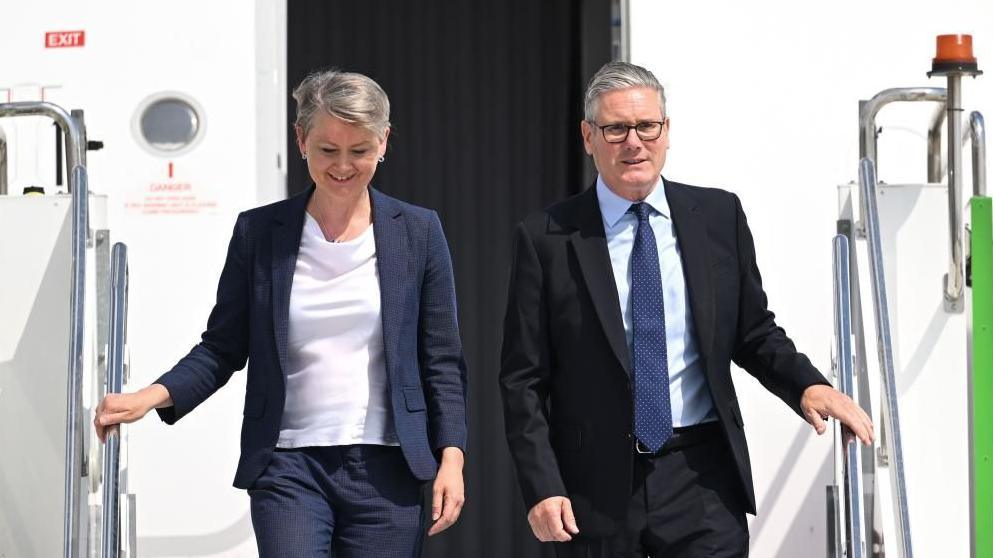
Image: British Prime Minister Sir Keir Starmer and Foreign Secretary Yvette Cooper arriving in Turkey for the Ankara summit.