The Iranian judiciary says two organisers of a marathon have been arrested for allowing women who were not wearing hijabs to take part.
The move comes after images appeared online of unveiled women competing in the race on Friday.
Two thousand women and 3,000 men took part separately in the marathon on Kish Island off the southern coast of Iran.
Dressed in red t-shirts, some of the women competitors were clearly not wearing the hijab or any other head covering.
This drew very different reactions.
Many supporters of change in Iran enthusiastically hailed the images as further evidence of Iranian women rejecting the restrictions placed by the authorities on what they can wear.
For their part, Iranian officials have responded to it as an unacceptable challenge to the status quo. The judiciary has moved quickly against the organisers.
It is not just the flouting of the rules on the hijab by some female competitors but that the marathon was held at all that has drawn condemnation from the country's theocratic Islamic leadership.
Just a few years ago, the sight of so many Iranian women in sports gear participating in such a mass public event – even if segregated from male participants – would have been seen as a contravention.
The prosecutor in Kish said the way that the race was being held was in itself a violation of public decency.
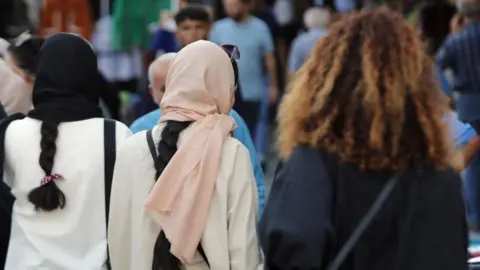
The issue of the hijab remains at the heart of the debate on where Iran might be going.
Government action against women appearing in public without a head covering has varied - sometimes permitting a loosening of the rules, at others mounting a clampdown on any transgression.
The mass protests that rocked Iran for months three years ago were triggered by the death of the young Kurdish Iranian woman, Mahsa Amini, who died in custody after being detained over an alleged breach of the dress code.
Since the protests were quelled through force and mass arrests, some Iranian women have continued to defy the rules.
That has prompted a recent pushback by the authorities.
The head of the judiciary has warned of a renewed campaign against women not wearing the hijab in public. Gholamhossein Mohseni Ejei said that intelligence agencies had been ordered to identify and report on what he called organised trends promoting immorality and non-veiling.
There is clearly no end for now in the standoff between Iran's leaders and many of its own people – particularly in the younger generation – over how women are allowed to dress.