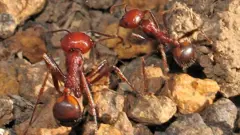
During Kenya's rainy season, giant African harvester ants are seen swarming as part of their mating ritual, presenting an opportunity for illegal collectors and smugglers. Known to fetch around $220 for a single queen on the black market, these ants are increasingly popular with hobbyists who desire to maintain colonies in controlled environments. The trade operates largely online and has gained momentum, surprising both scientists and law enforcement, as Kenya is typically recognized for more conventional wildlife trafficking like elephant tusks and rhino horns.
Smugglers benefit from the ants' ability to be transported undetected, as organic materials are often overlooked by scanners. The entire operation is a reminder of the challenges of regulating an underground market that has recently claimed the attention of the Kenya Wildlife Service (KWS).
Last year, authorities uncovered a significant smuggling operation with approximately 5,000 queen ants discovered alive at a guesthouse in Naivasha, slated for sale in Europe and Asia. Experts warn that this trade could severely impact local ecosystems, as they are keystone species essential for seed dispersion and maintaining the integrity of grasslands.
Calls are increasing to classify non-native ants under the Convention on International Trade in Endangered Species (Cites) to better control the trade. While there are legal channels to collect ants in Kenya, they aren’t being utilized adequately. Local voices are suggesting that properly managed exploitation could lead to economic benefits without harming the environment, provided regulations ensure sustainable practices.
Smugglers benefit from the ants' ability to be transported undetected, as organic materials are often overlooked by scanners. The entire operation is a reminder of the challenges of regulating an underground market that has recently claimed the attention of the Kenya Wildlife Service (KWS).
Last year, authorities uncovered a significant smuggling operation with approximately 5,000 queen ants discovered alive at a guesthouse in Naivasha, slated for sale in Europe and Asia. Experts warn that this trade could severely impact local ecosystems, as they are keystone species essential for seed dispersion and maintaining the integrity of grasslands.
Calls are increasing to classify non-native ants under the Convention on International Trade in Endangered Species (Cites) to better control the trade. While there are legal channels to collect ants in Kenya, they aren’t being utilized adequately. Local voices are suggesting that properly managed exploitation could lead to economic benefits without harming the environment, provided regulations ensure sustainable practices.