China's economy grew faster than expected in the first three months of the year, even as countries around the world feel the impact of the US-Israel war with Iran. Gross domestic product (GDP) rose by 5% in the period compared to a year earlier, according to official data. Economists had expected the figure to come in at around 4.8%. This growth came despite the conflict in the Middle East, which started on 28 February, severely disrupting global energy supplies, with Asian countries hit particularly hard.
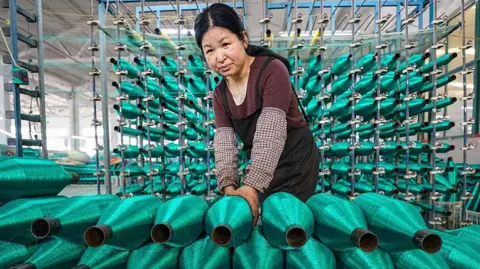
The figure marks the first release of official GDP statistics since Beijing cut its annual economic growth target last month to a range of 4.5%-5%, the lowest since 1991. A rebound from a weaker 4.5% in the previous quarter was driven by manufacturing, though the world's second-largest economy is still weighed down by falling property investment.
Cars and other exports were a major bright spot in the data, said Kyle Chan, an analyst from the Brookings Institution. However, he adds that the full effects of the Iran war are yet to manifest, and the next quarter's GDP is likely to weaken due to trade disruptions resulting from the conflict.
China's GDP goals were announced in March under its latest Five Year Plan, alongside a promise for significant investments in innovation, high-tech industries, and domestic spending. The ruling Communist Party seeks to reshape the economy amidst challenges such as weak consumption, a shrinking population, and a prolonged property crisis.
Abroad, China contends with energy constraints exacerbated by the Iran war and ongoing trade tensions, particularly from U.S. tariffs imposed on a significant portion of Chinese goods. As of now, the country faces a 10% tariff, with U.S. Treasury Secretary Scott Bessent indicating that these levies may be restored by July.
In a related note, recent monthly export figures from March reflect a sharp slowdown in growth due to escalating inflation and curbed consumer spending, pointing to the potential long-term impact of the ongoing geopolitical conflicts.
The figure marks the first release of official GDP statistics since Beijing cut its annual economic growth target last month to a range of 4.5%-5%, the lowest since 1991. A rebound from a weaker 4.5% in the previous quarter was driven by manufacturing, though the world's second-largest economy is still weighed down by falling property investment.
Cars and other exports were a major bright spot in the data, said Kyle Chan, an analyst from the Brookings Institution. However, he adds that the full effects of the Iran war are yet to manifest, and the next quarter's GDP is likely to weaken due to trade disruptions resulting from the conflict.
China's GDP goals were announced in March under its latest Five Year Plan, alongside a promise for significant investments in innovation, high-tech industries, and domestic spending. The ruling Communist Party seeks to reshape the economy amidst challenges such as weak consumption, a shrinking population, and a prolonged property crisis.
Abroad, China contends with energy constraints exacerbated by the Iran war and ongoing trade tensions, particularly from U.S. tariffs imposed on a significant portion of Chinese goods. As of now, the country faces a 10% tariff, with U.S. Treasury Secretary Scott Bessent indicating that these levies may be restored by July.
In a related note, recent monthly export figures from March reflect a sharp slowdown in growth due to escalating inflation and curbed consumer spending, pointing to the potential long-term impact of the ongoing geopolitical conflicts.