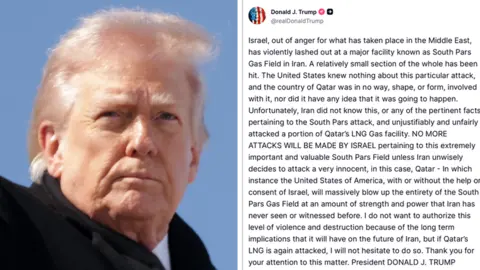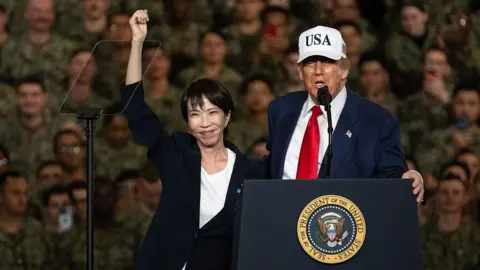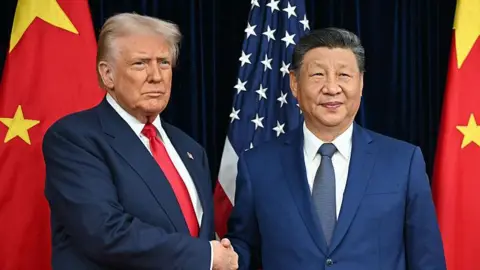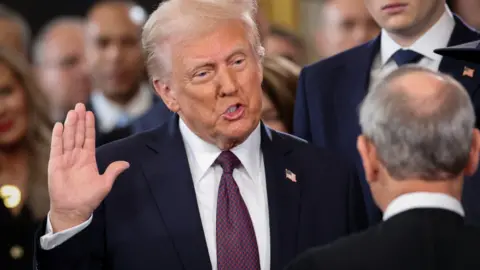
Donald Trump's presidency has been marked by unprecedented challenges to the established world order since World War II. In a rousing inauguration one year ago, Trump declared, Nothing will stand in our way, setting an assertive tone for his second term.
His recent statements have reignited discussions about American exceptionalism, particularly invoking the concept of manifest destiny as he turns his attention towards Greenland, stating, We have to have it. The implications of such declarations have raised eyebrows among political analysts, who stress that it represents a stark departure from past diplomatic norms.
Throughout American history, presidents have engaged in territorial disputes, but none have made outright claims against an allied nation. Trump's actions challenge long-standing foreign relations, prompting reactions from international leaders who express concern over a potential trade war and the future of NATO.
French President Emmanuel Macron has articulated fears of a world easing into an era where international laws are disregarded for aggressive state manipulations. In this context, Trump's presidency is defined by a marked transformation, molding America’s foreign policy landscape towards unilateral approaches and leveraging force.
As concerns mount about potential military actions or aggressive territorial actions, defenders of Trump's America First agenda dismiss worries related to multilateral agreements that have been the backbone of post-war peacekeeping efforts.
With global alliances in jeopardy and the U.S. leadership style undergoing drastic changes, the concern extends to how traditional diplomatic tools can navigate the new political climate Trump has created.
This reshaping of international relations will be crucial in determining if the world adjusts to—or resists—the evolving landscape under Trump's directive based on assertiveness and national interest.