Another year, another flop. The UK has self-destructed at Eurovision all over again. Look Mum No Computer, aka musician Sam Battle, got one solitary point, ending up in last place. It's the third time we've been at the bottom of the table since 2020. We've made the top 10 once since 2010. This is the fourth consecutive year I've written a post-mortem on our failure.
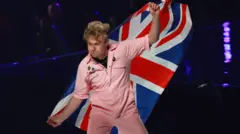
In the run-up to the contest, there was little hope that Sam's shouty synth-pop banger Eins, Zwei, Drei, would fare well. The musician gave it his all, stomping around the stage in a bright pink boiler suit while singing about quitting his office job so he could go to Germany and count to three. It was, as Graham Norton observed, a big swing.
Now, look, I'm all for taking a chance. If anything, our previous Eurovision entries played it too safe, pandering to a cliché of polished electro-pop. Sam was different. Eccentric and engaging, with the uncontainable energy of a shaken-up Coke bottle, he came up with a song that sounded uniquely British. Still, the public response was dismal, and the entry was left in the dust again.
What can be learned from this experience? For one, Finland's recent revival in Eurovision success shows that owning your quirks could be a path forward. The UK might do well to embrace its own individuality in the contest going forward, perhaps by fostering a greater sense of collaboration with leading music figures and more established artists.
Ultimately, the road to a successful Eurovision entry remains complicated, with many factors at play, each needing to align perfectly for a positive outcome. The challenge ahead for the BBC is ensuring that this year’s entry leaves a lasting positive impression, rather than dragging the country's reputation down further.
In the run-up to the contest, there was little hope that Sam's shouty synth-pop banger Eins, Zwei, Drei, would fare well. The musician gave it his all, stomping around the stage in a bright pink boiler suit while singing about quitting his office job so he could go to Germany and count to three. It was, as Graham Norton observed, a big swing.
Now, look, I'm all for taking a chance. If anything, our previous Eurovision entries played it too safe, pandering to a cliché of polished electro-pop. Sam was different. Eccentric and engaging, with the uncontainable energy of a shaken-up Coke bottle, he came up with a song that sounded uniquely British. Still, the public response was dismal, and the entry was left in the dust again.
What can be learned from this experience? For one, Finland's recent revival in Eurovision success shows that owning your quirks could be a path forward. The UK might do well to embrace its own individuality in the contest going forward, perhaps by fostering a greater sense of collaboration with leading music figures and more established artists.
Ultimately, the road to a successful Eurovision entry remains complicated, with many factors at play, each needing to align perfectly for a positive outcome. The challenge ahead for the BBC is ensuring that this year’s entry leaves a lasting positive impression, rather than dragging the country's reputation down further.