In brief
On Tuesday night a small quadcopter with a bomb was found parked on the runways of Leipzig/Halle Airport. German officials warned of a new level of danger and speculated that foreign powers could be involved, though no concrete evidence links the device to Russia. The incident echoes a 2024 plot in which DHL packages ignited at similar locations, and ties to a network of Russian financiers were revealed by Lithuanian and Polish prosecutors. Ukrainian claims of delivery routes and drone parts were highlighted by a suspect named Vladyslav in court, shedding light on how the devices were assembled and distributed. International observers and NATO officials emphasize that this may be a hybrid warfare tactic aimed at sowing disruption and fear among allies.
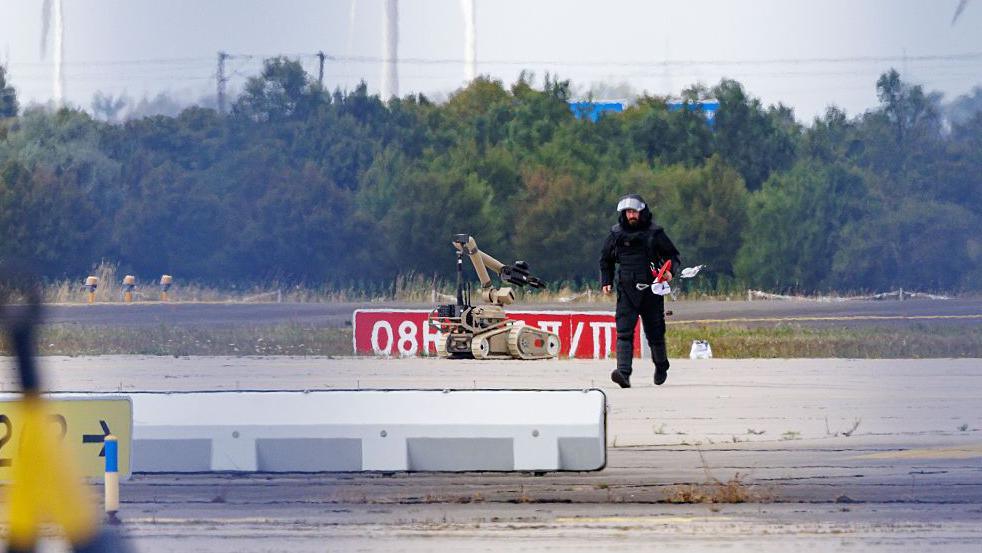
On Tuesday night a small quad‑copter was discovered on the tarmac of Leipzig/Halle Airport. The device, suspected of carrying explosives, forced a runway lockdown while bomb‑disposal robots rushed in to neutralise the threat.
Nearby, several Ukrainianised Antonov cargo planes with a “Be Brave Like Kherson” sticker were visible, underscoring the close ties between Germany and Ukraine.
German authorities have warned that the drone may involve an international conspirator or external power. Russia has denied any role, yet the pattern of past attacks suggests a potential link.
In 2024 a sophisticated incendiary device—believed to contain Semtex with RDX—caught fire at a DHL hub in Leipzig just before being loaded onto a plane. Similar packages ignited in the UK and Poland, when a group of men, now on trial in Poland and Lithuania, had been accused of transporting the explosives around Europe concealed in food cans and headphone covers.
Vladyslav D., a Ukrainian suspect appearing in court, described long‑haul journeys instructed by a man called “Warrior.” He was instructed to transport drone parts hidden in a bag of sweetcorn, and to stage the devices in locations such as a Lithuanian cemetery. Vladyslav claimed he had been paid over $2,000 in cryptocurrency for these tasks.
Experts say the lack of detailed evidence on the Leipzig drone keeps the picture incomplete, but the possibility of Semtex that can cause significant damage cannot be ruled out. Professor Jackie Akhavan of Cranfield University explains that a metal drone with an explosion could dent or rupture aircraft, creating a few metres of blast wave.
Analysts push the hypothesis that Russian intelligence is trying to sow fear among allies. The attack amplifies perceived vulnerabilities in European aviation infrastructure amidst the ongoing war in Ukraine, and could serve to signal Moscow’s capability to disrupt foreign support for Kyiv.
Internationally, NATO officials remain aware of the incident and are closely monitoring developments. Antonov Airlines, which supplies aircraft for NATO operations, has stated it is treating the event with caution, though it declined to comment on possible Ukrainian involvement. Observers in Russia warn that such hybrid attacks could rise sharply in the coming months as the conflict dynamics shift.