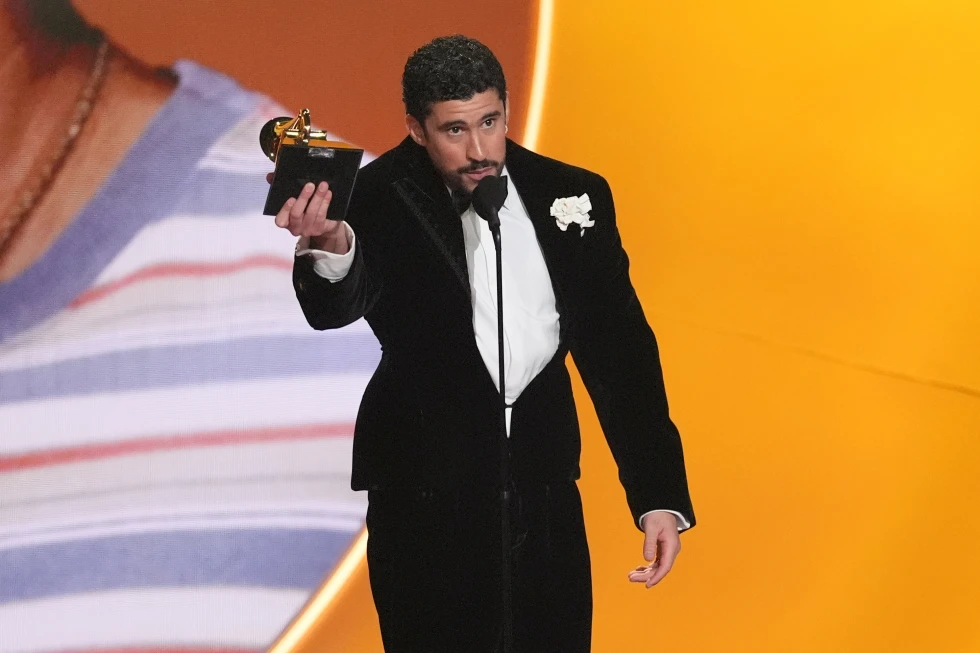
LOS ANGELES (AP) — The 2026 Grammy Awards witnessed a historic moment as Bad Bunny's 'Debí Tirar Más Fotos' was awarded Album of the Year, a recognition that many industry experts deemed well-deserved yet surprising. The event was also notable for its strong anti-Immigration and Customs Enforcement (ICE) sentiment, as numerous artists utilized their platform to speak against current immigration policies.
The Grammy Awards have faced criticism in the past for their lack of diversity, particularly concerning artists of color. However, recent efforts by the Recording Academy to diversify its voter base are bearing fruit, with 50% of newly added members being under 39 years old and 58% identifying as people of color.
An Artistic Triumph
Bad Bunny joins a select group of Latino artists who have received the Album of the Year accolade, with 'Debí Tirar Más Fotos' being touted not just as a commercial hit but an artistic triumph as well. This album blends traditional Puerto Rican musical forms with contemporary genres, marking a significant cultural achievement.
Vanessa Díaz, co-author of 'P FKN R', remarked, There’s so much amazing Latin music that has been overlooked, and that’s part of what is so beautiful about this moment. The album resonates with global social struggles, making its messages relevant beyond just Latino identity.
Political Messages on Stage
Throughout the ceremony, artists such as Billie Eilish and Olivia Dean voiced their support for immigrant rights. Eilish made her stance clear with the statement, No one is illegal on stolen land, echoing sentiments shared by many in the industry. Bad Bunny, in particular, emphasized the humanity of immigrants during his acceptance speech, stating, We are humans and we are Americans.
This contrast between celebration and critique showcased how the Grammy platform has evolved, with artists ready to address pressing social issues head-on.
A New Era for the Grammys
As the Grammys continue to evolve, this year's ceremony stood out in both its recognition of Latino culture and the bold political stances taken by its attendees. More than just an awards ceremony, the event became a rallying point for discussions around immigration and representation, marking a pivotal shift in the music industry. As Bad Bunny prepares for his upcoming performance at the Super Bowl, he symbolizes the intersection of cultural identity and political activism, exemplifying the role of music in reflecting and shaping public discourse.