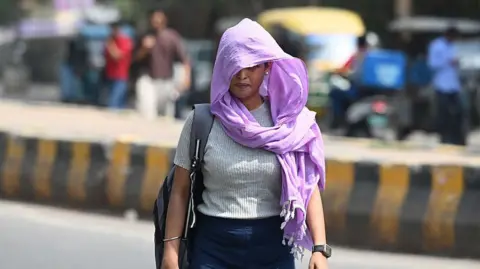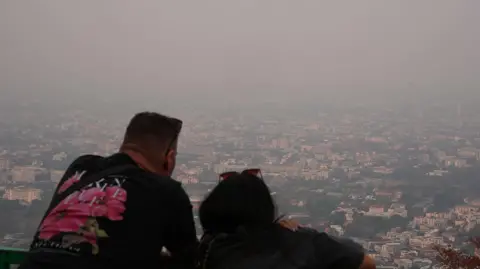
The toxic haze shrouding the Indian capital, Delhi, spares no-one, but its children are counting the biggest cost of the city's worsening and recurrent pollution problem.
Nowhere is this more evident than at paediatricians' clinics. The BBC visited one such facility in Noida, near Delhi, on a weekday morning a few days back.
In a packed waiting hall outside the doctor's consulting room, anxious parents stood in line with children sneezing, coughing or complaining of breathing difficulties.
Most started falling ill in October, when the capital's air quality dipped to hazardous levels and waiting times for doctor's appointment had stretched longer than usual.
Toxic air is a recurring problem in Delhi and across parts of northern India during the winter.
There isn't a single cause behind the problem, but a mix of factors like low wind speeds, industrial emissions, vehicle exhaust, dropping temperatures and the seasonal burning of crop stubble in neighbouring states.
Since the last month, Delhi's Air Quality Index (AQI) - which measures different types of pollutants, including the level of fine particulate matter PM2.5 that can clog lungs - has been hovering between 300 and 400. This is more than 20 times the limit recommended by the World Health Organization.
Readings above 400 affect all healthy people and seriously impact those with existing diseases, but high exposure to PM2.5 hits children and the elderly the hardest.
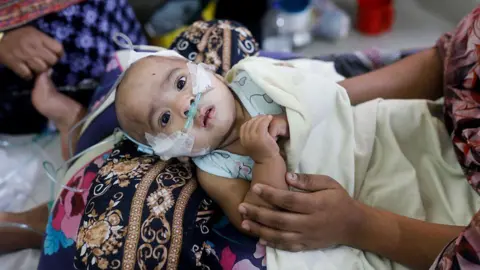
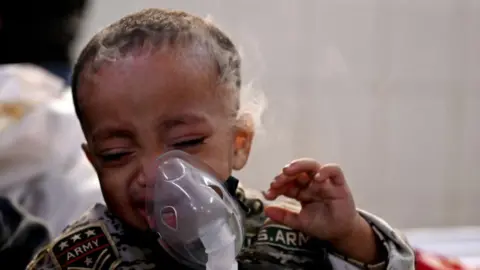
Across the capital, many hospitals have seen an influx of children who are sick because of the unbreathable air.
Dr Shishir Bhatnagar, a paediatrician at the Noida clinic, stated that cases of respiratory issues in children have increased tenfold in recent years. He noted that during pollution season, the percentage of patients with such complaints can shoot up to 50-70%.
Each year, the government rolls out emergency steps - halting construction, banning polluting vehicles - to curb the smog. This year, it even tried cloud seeding to trigger artificial rain, without success.
But none of it has helped ease the pollution crisis that sparks anxiety among the city's 20 million people - particularly among parents of young children.
Khushboo Bharti, a parent, recalls a panic-inducing night when her one-year-old daughter, Samaira, was rushed to the emergency due to severe coughing and vomiting. After treatment, Samaira was diagnosed with pneumonia, which raises concerns for her long-term health.
Research shows that exposure to air pollution can lead to stunted development, weaker immunity, and lower cognitive ability in children. Recent studies link pollution exposure to an increased risk of dementia as well.
For now, Delhi has implemented measures to limit children's exposure, such as postponing outdoor activities. However, for economically disadvantaged families, these adaptations may be insufficient, as many live in areas already exacerbated by indoor pollutants.
Dr A Fathahudeen warns that early childhood infections from pollution exposure can lead to chronic respiratory issues later in life, similar to consequences faced by smokers.
Parents question the long-term viability of keeping their children indoors, recognizing the need for physical activity while grappling with the dangers posed by the toxic air.