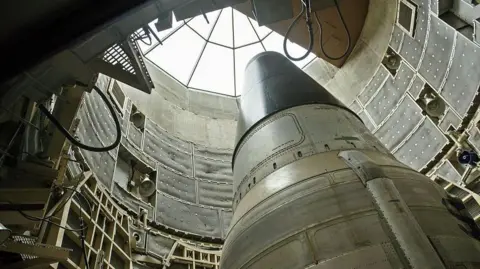
The last nuclear weapons control treaty between the US and Russia is due to expire soon, raising fears of a new arms race.
The Strategic Arms Reduction Treaty, known as New START, was signed in 2010 and aimed to prevent a catastrophic nuclear war.
The treaty limited the number of deployed strategic nuclear warheads for both countries to 1,550 each and established transparency measures, including data exchanges and on-site inspections.
This expiration signifies the end of arms control cooperation that had been instrumental since the Cold War. Calls for renewing the treaty have intensified, as global tensions escalate.
On Wednesday, Pope Leo urged both nations to renew the treaty, emphasizing the need to prevent a new arms race. Over the years, several key arms control treaties, including the Intermediate-Range Nuclear Forces Agreement and the Open Skies Treaty, have also been dissolved or suspended.
The strategic landscape is further complicated by modernizations on both sides. Darya Dolzikova from RUSI notes that the expiration of New START is troubling, as it could encourage both the US and Russia to expand their military arsenals.
Former British armed forces chief Admiral Sir Tony Radakin warned of the unraveling safety structures, calling the breakdown of these treaties a dangerous trend.
Amidst these shifts, the narrative is complicated by differing perspectives in Washington and Moscow regarding future arms control. Whereas the Biden administration views discussions for a new treaty as crucial, Russia insists on including other nuclear powers in such discussions.
The rapidly changing geopolitical dynamics, paired with military modernization efforts—including hypersonic missiles—create a concerning environment where the potential for a new arms race looms large.