The recent surge in fuel prices due to the ongoing conflict in Iran has significantly spurred demand for electric vehicles (EVs) globally, with Chinese manufacturers poised to capitalize on this trend.
As the world’s leading producer of EVs, China finds itself largely shut out of the expansive U.S. market, yet its manufacturers are still witnessing heightened interest and orders from dealerships throughout Asia and beyond.
Among them, BYD has emerged as a dominant player, having surpassed Tesla in vehicle sales last year and aggressively pursuing international markets.
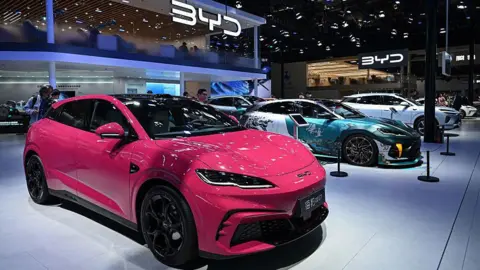
We survive and are successful without the US market today, declared BYD’s Executive Vice President Stella Li during the recent Beijing Auto Show. Instead of focusing on the U.S. market, the company is diverting its efforts to cater to the surging demand in countries like Brazil, the UK, and those across Europe.
Li noted, Consumers feel the daily savings when oil prices hike. EVs help them save money every day and emphasized that demand presently surpasses their capacity to supply.
To address these challenges, BYD is turning to new technologies, including a disruptive flash charging method that can add hundreds of kilometers of range in mere minutes. This innovation is positioned to ease customers' concerns regarding charging durations and expand BYD’s competitive edge.
At the Beijing Auto Show, the largest automotive exhibition globally, over 1,400 vehicles were showcased, placing Chinese manufacturers in the spotlight.
BYD's global expansion comes amid complex geopolitical tensions which have led to challenges, particularly concerning tariffs and regulatory barriers in foreign markets, especially in the U.S., which has raised alarms over Chinese subsidies and data security.
Despite these hurdles, Li emphasized that BYD is gaining greater brand recognition in other regions, particularly in the UK, as it transitions from being seen as a low-cost alternative to a serious competitor based on advanced technology—especially in battery and software.
Reflecting on the future, Li stated, We are not just a car company; we produce a substantial share of global smartphone components and play a vital role in battery storage, solar panels, as well as in buses and trucks, making BYD an ecosystem.
Innovations Beyond Vehicles
The show highlighted additional innovations within the industry, with X-Peng unveiling plans for a six-seater electric SUV and even ambitions for humanoid robots and flying cars by 2027.
In contrast, established foreign carmakers like Volkswagen, Toyota, and Ford struggle to adapt, often opting to collaborate with local Chinese firms, leveraging cutting-edge technologies in battery and EV development.
The intense competition among numerous domestic manufacturers has led to price wars and rapid product cycles, with BYD’s domestic sales declining over the last several months. However, its overseas sales in Europe surged by 156% during the first quarter of this year.
Li remarked that sustaining such competitive pressures would inevitably lead to market consolidation, stating, History suggests not all will survive, referencing historical market shifts seen with Japanese and South Korean manufacturers.
Ultimately, BYD is navigating these complex challenges while demonstrating a strong commitment to innovation and market expansion beyond its borders.