Kenya's parliament has accused British soldiers of decades of sexual abuse, killings, human rights violations, and environmental destruction while training in the country.
The report detailed harrowing testimony from communities in Laikipia and Samburu counties, near the military training bases.
The British soldiers are accused of evading accountability by refusing to cooperate with the parliamentary investigation.
The UK High Commission in Kenya said it regretted that its submission was not reflected in the report's conclusions and affirmed its readiness to investigate the allegations under our jurisdiction fully, once evidence is provided.
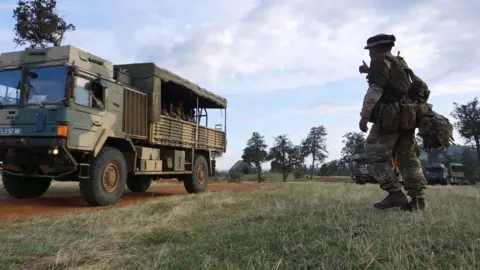
For decades, troops from the British Army Training Unit in Kenya (Batuk) have been training in central Kenya but their presence has long attracted controversy, with soldiers accused of misconduct and rights abuses.
More than 1,000 Kenyan soldiers receive British training each year, while thousands of UK troops are sent to Kenya for training exercises.
In a 94-page report following a two-year inquiry, Kenya's parliamentary Committee on Defence, Intelligence and Foreign Relations accused Batuk of continued ethical breaches, rights violations, and environmental negligence, as well as employment and labour concerns.
The panel cited oral and written submissions from affected civilians, victims, community leaders, civil society organisations, and public agencies.
The report said that during the inquiry, host communities had complained of killings, assaults, and maimings, including public fights and fatal traffic incidents, involving Batuk soldiers.
Among the worst cases was the 2012 murder of Agnes Wanjiru, whose body was found in a hotel septic tank in the central garrison town of Nanyuki, nearly three months after she was alleged to have spent an evening with British soldiers.
Another case involved the "unlawful killing" of herder Tilam Leresh allegedly by a Batuk sergeant in 2012, yet no arrest or prosecution has taken place in either Kenya or the UK. The UK has previously expressed regret over Leresh's shooting by an on-duty British soldier, but noted that there was insufficient evidence to bring charges.
The report documented testimony from victims, detailing how British soldiers had allegedly preyed on local women while they were fetching firewood or grazing livestock.
It cited compelling evidence of widespread sexual violence perpetrated by Batuk soldiers particularly against women from the Samburu and Maasai communities. Cases of rape remain unresolved, with victims claiming to have been denied access to justice.
The MPs also alleged that Batuk has never carried out legally required environmental and social impact assessments for its field exercises, raising concerns over toxic military waste affecting local health.
The investigating panel stated that Batuk had persistently declined to appear before the committee and had often invoked claims of diplomatic immunity.
The UK High Commission asserted its willingness to investigate new allegations but noted the structural flaws within the bilateral military agreement that hinder accountability.
In conclusion, the Kenyan parliamentary report calls for amendments to the military cooperation framework to introduce a strong code of conduct, establish provisions for civilian oversight, and ensure avenues for justice for the local communities affected by the conduct of British soldiers.