In brief
At COP29, Azerbaijan’s President defends fossil fuels as essential natural resources despite criticism from global leaders about their role in climate change. UN Chief Guterres emphasizes urgent action against fossil fuel reliance as nations negotiate critical climate agreements.
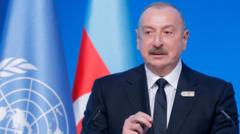
Azerbaijan's President Ilham Aliyev declared that fossil fuels are a "gift of god" during his address at the ongoing UN climate conference, COP29. In his remarks, he pushed back against what he termed "Western fake news" regarding emissions from countries rich in natural resources. Aliyev asserted that nations should not be blamed for possessing fossil fuels, stating that the market necessitates their availability. Azerbaijan is reportedly set to elevate its gas production by as much as 33% over the next decade, raising eyebrows about its commitment to climate objectives.UN Secretary-General António Guterres responded by asserting that reinforcing fossil fuel use in this climate is "absurd," highlighting the urgent advent of a "clean energy revolution." Guterres underscored the need for global leaders to acknowledge their responsibilities, particularly as industrialized nations are primarily responsible for emissions. UK Prime Minister Sir Keir Starmer made a pledge for England to reduce emissions by 81% by 2035, urging other nations to follow suit in the race for clean energy jobs. However, concerns linger regarding the suitability of holding the world’s largest climate conference in Azerbaijan, which has strong ties to the fossil fuel sector, particularly given the leadership of a former oil executive as the conference chair.Aliyev criticized the negative portrayal of Azerbaijan's environmental performance while asserting that the nation's contribution to global emissions is a mere 0.1%. He reiterated the argument that all nations should leverage their natural resources for economic growth.The ongoing discussions at COP29 come amidst a shift in U.S. leadership, following Donald Trump's recent election victory, which raises questions about the commitment of the world’s second-largest greenhouse gas emitter to continuing global climate initiatives. Guterres reinforced the need for an immediate global finance goal, demanding that wealthier nations step up support for poorer countries that are disproportionately impacted by climate change.Further complicating the negotiations is the absence of many major polluter leaders, like U.S. President Joe Biden and Indian Prime Minister Narendra Modi, from the Baku event. With developing countries seeking up to $1 trillion in funding to address ongoing climate impacts, pressure mounts for richer nations to redefine their roles amidst escalating climate emergencies evidenced by recent disasters worldwide.As discussions at COP29 continue until November 22, stakeholders remain vigilant, aware that significant hurdles must be overcome to forge a cohesive international climate agreement that is feasible and equitable for all nations involved.