In brief
A team of researchers recovered a 115‑million‑year‑old dinosaur limb bearing mineralized red blood cells and intact collagen peptides, the earliest unequivocal evidence of hemoglobin preserved in a fossil. Published in the Proceedings of the National Academy of Sciences, the finding challenges the conventional belief that blood molecules decay too rapidly to survive deep time and opens new doors for studying ancient physiology and biomolecule preservation.
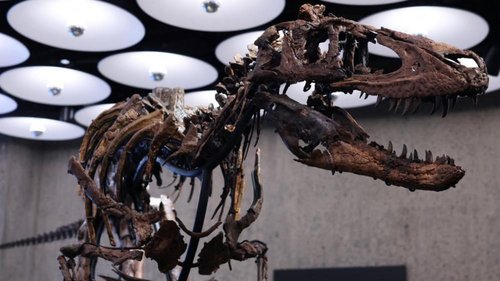
In a landmark study published by the Proceedings of the National Academy of Sciences, scientists announced that they have identified, for the first time, fossilized red blood cells and collagen peptides in a dinosaur bone that is 115 million years old. The specimen, a theropod recovered from sedimentary deposits in northeastern Brazil, contains millions of mineral‑coated cells still bearing traces of hemoglobin, the protein that carries oxygen in modern blood.
The International research team, which includes members from Australia, Japan, Brazil and the United States, used a combination of microscopy, spectroscopy and mass‑spectrometry techniques to examine the bone’s inner microstructure. They found that the red‑blood‑cell‑like structures were veined with a mineral known as hausmannite, a manganese‑iron oxide that appears to act as a natural preservative by locking the cellular architectures and associated biomolecules in place.
Preservation Context
According to the team’s statement released by Curtin University, the extraordinary preservation is attributed to the dinosaur’s rapid burial in an anoxic, microbially rich environment shortly after death. Low‑oxygen conditions typically slow decomposition, while the abundance of microbes can facilitate mineralization that encases cellular components. The presence of hausmannite, a mineral that forms under low‑oxygen settings, further suggests that the bone’s blood canal system was quickly and effectively mineralized.
Previous research had hinted at possible blood‑cell structures in ancient fossils, but this study is the first to chemically confirm the presence of hemoglobin‑derived molecules inside those cells. By analyzing the amino acid sequence of collagen peptides extracted from the bone matrix, the researchers demonstrated a high degree of sequence conservation relative to modern theropods, implying a long‑term stability of the collagen scaffold. The study therefore provides two independent lines of evidence—cellular morphology and molecular composition—that support the conclusion that these structures are indeed fossilized blood cells.
Implications for Evolutionary Biology
Lead author Kliti Grice, a distinguished professor at Curtin University, highlighted the broader significance of the discovery.
“These findings challenged longstanding assumptions that biomolecules such as hemoglobin could not survive deep time,” she said. The discovery opens new doors for studying the evolution of blood, metabolism and activity levels in ancient animals.By revealing the presence of hemoglobin in a dinosaur, the study allows scientists to begin quantifying the oxygen transport capacity of extinct species. This could help reconstruct their physiology, thermoregulation and ecological niche. The preserved collagen also provides a fossilized record of protein evolution, offering a rare window into the molecular changes that occurred during the late Jurassic period.
The research also has implications beyond Earth. The authors noted that understanding how hemoglobin can be preserved under extreme conditions on Earth could inform the search for life on other planetary bodies, such as Mars or Europa, where conditions mirror the anoxic, mineral‑rich environment described in the dinosaur’s burial site.
The study exemplifies the growing ability of paleontologists to recover biomolecular data from deep‑time samples. While DNA degrades within a few hundred thousand years under most conditions, proteins such as collagen have demonstrated far greater resilience, surviving in deposits that are across tens of millions of years old. The new finding pushes the timeline for protein preservation further back, suggesting that under the right conditions, even complex proteins like hemoglobin can last.
Researchers also emphasized the role of advanced analytical techniques in making such discoveries possible. Raman spectroscopy helped identify the hallmarks of the mineral‑coated cells, while liquid chromatography tandem mass spectrometry (LC‑MS/MS) allowed for precise peptide sequencing. These instruments, coupled with high‑resolution electron microscopy, provide a multi‑modal approach to verifying ancient biomolecules.
Future work will involve testing additional dinosaur fossils from varied geologic contexts to determine whether the preservation conditions observed in this specimen are unique or part of a broader pattern. The research team plans to investigate other theropod specimens from the Oxfordian stage to assess how widespread the preservation of blood cells might be across the Late Jurassic.
While the study provides robust evidence, it also acknowledges uncertainty regarding the exact mechanisms of hemoglobin stability over such extensive timescales. The authors invite further comparative analyses with non‑tetrapod fossils, including those of early fish and tetrapods, to see if the preservation of blood components extends even further back into evolutionary history.
In sum, the discovery of fossilized red blood cells and collagen in a 115‑million‑year‑old dinosaur from Brazil represents a significant advancement in paleobiology, revealing that pivotal biological molecules can survivalsignificantly longer than previously thought. As analytical technologies advance, similar insights may soon extend to even older life forms, reshaping our understanding of molecular preservation across deep time.