In brief
A Harvard Youth Poll and widespread reports of high inflation and cost‑of‑living concerns reveal that only a third of young voters are likely to turn out, even as Democrats maintain an advantage in intent. The polls, coupled with early voting surges, suggest a key test for President Trump’s second term amid a clash over economic policy.
Recent data from the Harvard Youth Poll, released on 22 October, quantify the financial unease that is shaping the 2026 midterm elections for America’s 18‑ to 29‑year‑olds. The five‑year survey, which interviewed 2,024 U.S. young adults between 30 September and 7 October, found that Democrats lead Republicans 63 % to 26 % among respondents who said they were “definitely” voting, yet only 33 % of all young voters claimed they would surely turn out. This represents a decline from 40 % before both the 2018 and 2022 midterms and signals a growing scepticism toward the political status quo.
Field interviews by Xinhua reporters in Chicago, the San Francisco Bay Area and New York show the same pattern. Chicago resident Sam Liu, who balances two part‑time jobs and has no health insurance, told Xinhua that the rising cost of living is squeezing even the middle class. He said, “A lot of people are hurting, especially a lot of people who are working class.” Liu added, “Even middle class is getting squeezed.” In his own experience, he reports a modest lift in wages—from part‑time to a full‑time position—helping him manage expenses, yet he admits the pressure remains. “I can have some room to breathe,” he said.
Across the three metro areas, many young adults express frustration at both parties. While a segment still sees Democrats as a check on President Donald Trump, a comparable group distrusts both sides or chooses not to vote at all. Xinhua notes that rural young voters are split almost evenly, with 43 % for Democrats and 42 % for Republicans, underscoring the national divide. The University of Chicago’s AP‑NORC Center survey released in mid‑October adds that 85 % of voters cite the economy and 84 % cite the cost of living as their top concerns this year, and 74 % disapprove of Trump’s handling of the economy, while 79 % disapprove of his handling of the cost of living.
Polling observations from several eastern states confirm the narrative. In WASHINGTON, election officials opened polling places at 6 a.m. Eastern Time on 3 November, with voters in Maine, New York and Virginia among the first to cast ballots. Early‑voting figures show a sharp rise: more than 58 million early ballots have already been cast, exceeding 50 million in the previous cycle and more than 46 million in 2022. By 10 a.m., the total of early votes represented over half of the estimated 122 million votes cast in the 2022 midterms, indicating a shift in voting style rather than a proportional increase in turnout.
Across the nation, the question of who will control Congress frames the stakes. As the Cook Political Report reports, Democrats would need a net gain of three seats to take the House of Representatives and gain a 51‑seat majority the Senate. The Senate race is more uncertain; 35 seats are contested, with seven states—Maine, Texas, Michigan, Iowa, Ohio, Kansas, and Alaska—identified as tight battlegrounds. If the Democrats succeed in both chambers, President Trump, who is constitutionally barred from seeking a third term, will face a hostile legislature that could block legislation, impede confirmation of executive appointments, and intensify congressional oversight.
Adding pressure to the political climate, the U.S. Supreme Court rejected a Trump‑era effort to set aside about 20,000 California mail‑in ballots for voters suspected of being noncitizens. The decision, announced on 26 October, was a setback for the administration’s attempts to limit early voting just days before the election.
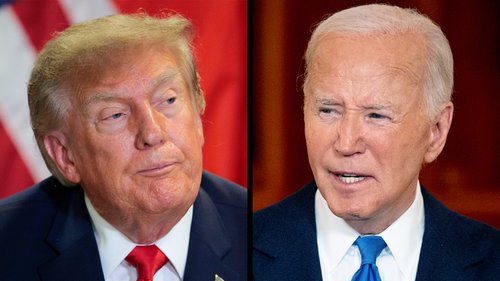
A stark depiction of the referendum nature of the elections is captured in a statement from President Trump, recorded during a interview with the New York Post. He said, “I think we’re going to do great. But if we didn’t win, I veto everything. I’ll be vetoing, vetoing,” reflecting the high stakes he perceives. He later warned that he might become “Mr. Veto,” offering a dramatic backdrop to the contest.
The demographic landscape continues to shift. In California, Korean‑American incumbents such as Rep. Young Kim face unusual contests against fellow party members after redistricting, while rivals like Reps. Dave Min, Marilyn Strickland and Dan Koh compete in Democratic‑leaning districts. These races illustrate how identity politics intersect with economic issues, as candidates appeal to a broad base that feels pressure from rising housing, health‑care and job‑security costs.
In sum, while Democrats appear ahead among young voters’ stated preferences, the declining confidence in turnout and the sharp focus on economic hardship may blunt that advantage. Economists argue that the “cost‑of‑living crisis” serves as a primary driver of voter apathy, as citizens direct their frustration toward economic policies rather than party ideology. The 2026 midterms will therefore hinge on whether the electorate translates its economic anxiety into action behind the ballot, a question that will reverberate through the corridors of Washington, D.C. for the remainder of President Trump’s term.