In brief
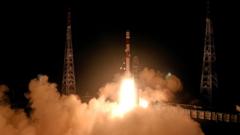
India’s ambitious foray into space exploration marked a historic stride with the successful docking of two spacecraft during the SpaDeX mission, launched from Sriharikota on December 30. This monumental test not only affirms India’s capabilities but also positions it as the fourth nation globally to showcase such technology, joining the ranks of the United States, Russia, and China.
The SpaDeX mission, short for Space Docking Experiment, signified a critical advancement for India’s space agency, ISRO. After various rescheduling issues, the two spacecraft—referred to as the Chaser and the Target—successfully completed their docking tests, a process noted for being highly complex and requiring precise execution. The connection was achieved by initially positioning the crafts to travel 10-20km apart at different velocities, enhancing the precision required for docking.Prime Minister Narendra Modi and Federal Science Minister Jitendra Singh celebrated the event, emphasizing its significance for future endeavors, including the proposed Indian space station and plans to send humans to the Moon. While a two-day delay was associated with conducting further simulations and troubleshooting initial errors in the approach, ISRO successfully brought the Chaser within just three meters of the Target before securely connecting them.The docking not only serves as a technological breakthrough but also as a connection to advanced experiments. After the docking, the mission will undertake experiments including power transfer between the crafts and inter-satellite communication, fundamental for future missions. Among the innovations tested is the ability to cultivate crops in microgravity, a vital aspect for long-term space missions.ISRO continues to transform challenges into opportunities, repurposing components of the launch vehicle for orbital experiments, aiming to utilize these assets in valuable research without generating unnecessary space debris. The mission is designed to carry several payloads that ambitiously extend the scientific horizons of space exploration.As ISRO maintains its focus on affordability and efficiency in space missions, the implications of the SpaDeX mission echo not only for India’s space ambitions but also for humankind's exploration of the cosmos, underscoring a future where interstellar agriculture and debris management will be paramount.