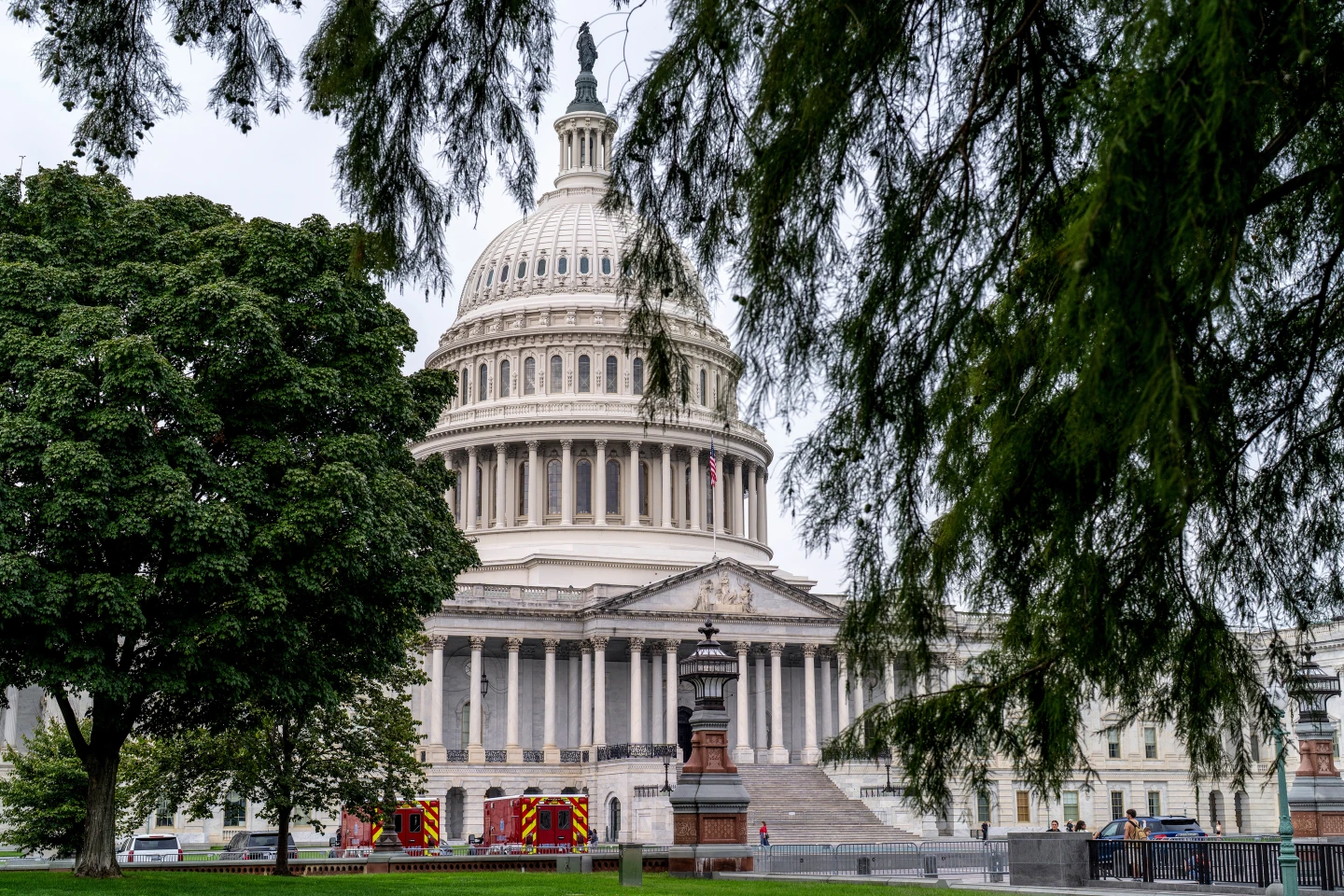
WASHINGTON (AP) — The looming threat of a government shutdown is casting a shadow over Washington, D.C., as gridlock grips Congress. Despite the urgency, prospects for a compromise appear bleak.
Republicans have introduced a temporary funding solution to keep the government operational until Nov. 21, yet Democrats have voiced strong objections. They demand that the proposal include crucial health care provisions, aiming to reverse substantial Medicaid cuts linked to President Donald Trump’s summer mega-bill and to prolong tax credits facilitating affordable health insurance for many.
Both parties have shown little willingness to compromise, with the House not scheduled to convene before a potential shutdown.
What happens in a shutdown?
When the government faces a funding lapse, federal agencies must suspend operations and furlough non-essential personnel—known as non-excepted employees. Those deemed excepted are required to continue working, albeit without immediate pay.
During the 35-day partial shutdown of Trump’s first term, around 340,000 of 800,000 targeted federal workers were temporarily laid off.
What government work continues during a shutdown?
Surprisingly, many critical operations remain functional during a shutdown. Personnel from agencies like the FBI, CIA, and air traffic control systems will still report for duty. This extends to the military and other mandatory spending programs, such as Social Security payments, which continue uninterrupted.
Healthcare services for seniors under Medicare and veteran services will also be unaffected.
Will furloughed federal workers get paid?
Yes, furloughed employees are entitled to back pay once the shutdown concludes, thanks to a law passed in 2019 guaranteeing retroactive payment for the days employees did not work. That said, many individuals may experience temporary financial strain due to delays in their regular paychecks.
Will I still get mail?
Yes, the U.S. Postal Service will operate independently since it’s funded through its services, not taxpayer dollars.
What closes during a shutdown?
During past shutdowns, various agencies exercised discretion over what services to halt. The White House’s latest directive implies potential mass firings of federal workers whose programs lack funding. This would differ starkly from earlier shutdowns when employees were merely furloughed with a guarantee of job reinstatement.
Shutdown practices in the past
Historical documentation from previous administrations provides insight into the ramifications of a shutdown, highlighting crucial areas that would face immediate impacts such as the Education Department and the National Park Service.
As the impasse continues, stakeholders in Washington are gearing up for possible repercussions, while the potential for a shutdown remains on the horizon.