Both Tencent and CATL have refuted claims of military affiliations, with Tencent branding its inclusion as a "clearly a mistake" and asserting that it operates solely in the civilian sector. Meanwhile, CATL echoed similar sentiments, emphasizing its non-involvement in military operations. In response to the US actions, Beijing condemned the inclusion as "unreasonable suppression," stating that it undermines international economic norms and would erode confidence among foreign investors considering the US market.
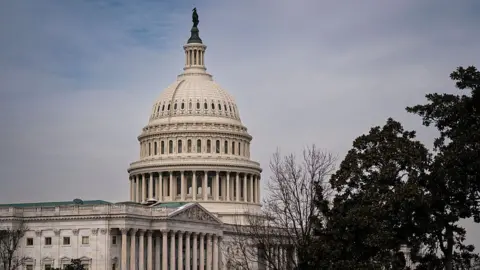
The annual update of the list now features 134 companies, reflecting the Pentagon's strategy to counter China's perceived efforts to bolster its military capabilities through technological advancements derived from various sectors. Recent lobbying from US lawmakers has played a role in the expansion of the list, particularly as US automotive giant Ford announced plans to invest $2 billion in a Michigan battery plant, which includes technology licensing from CATL.
Tensions between the US and China have continued to escalate, with ongoing disputes surrounding technology transfers and trade practices. The recent developments come as former President Donald Trump, known for his hawkish stance towards China, prepares to return to the White House, potentially influencing the future of US-China relations. Previously, companies like DJI and Hesai Technologies have also faced legal challenges over their inclusion on the list, signaling the fraught dynamics of the tech landscape amid a turbulent geopolitical climate.
The annual update of the list now features 134 companies, reflecting the Pentagon's strategy to counter China's perceived efforts to bolster its military capabilities through technological advancements derived from various sectors. Recent lobbying from US lawmakers has played a role in the expansion of the list, particularly as US automotive giant Ford announced plans to invest $2 billion in a Michigan battery plant, which includes technology licensing from CATL.
Tensions between the US and China have continued to escalate, with ongoing disputes surrounding technology transfers and trade practices. The recent developments come as former President Donald Trump, known for his hawkish stance towards China, prepares to return to the White House, potentially influencing the future of US-China relations. Previously, companies like DJI and Hesai Technologies have also faced legal challenges over their inclusion on the list, signaling the fraught dynamics of the tech landscape amid a turbulent geopolitical climate.