In brief
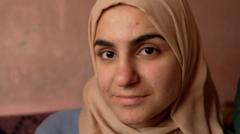
Baraa, a young university student from Homs, reflects on her traumatic childhood during Syria's civil war while celebrating newfound hope as the nation moves past Bashar al-Assad's rule. Together with her family and others in the city, they navigate the painful memories of loss and trauma while expressing optimism for rebuilding their lives and community.
Baraa, now 20 years old, recalls her harrowing childhood experiences in Homs, where she survived a brutal siege. Once known as the "capital of the revolution," Homs became synonymous with suffering as the war intensified. Nearly a decade later, amid recent celebrations marking the end of Bashar al-Assad's long-standing regime, the city pulses with an invigorating sense of hope. Sitting with her sisters in their modest home, Baraa reflects, "Even now, I look back and wonder how we survived this nightmare." Memories of escaping starvation, seeing unimaginable violence, and grappling with trauma are overshadowed by a growing desire for a better future. Her father, Farhan Abdul Ghani, shares the sentiment, recalling how they never wished for war or oppression.The remnants of destruction remind them of the past, yet the optimism of Baraa and her family is palpable. A professor's words echo in her heart as she dreams of completing her education and improving her English. "I felt as if I was asleep and I lost hope," she admits, but now the horizon seems bright.Dr. Hayan al-Abrash, a former underground hospital director in Homs, walks past the jury-rigged remains of his makeshift healthcare facility, which once saved lives. He struggles with the memories and losses, including the death of a brother in a notorious prison. Both he and Farhan, united by their grief for lost loved ones, express determination to rebuild society together, regardless of differing faiths.The community's resilience shines through in their shared commitment to healing and rebuilding despite the lingering trauma. "It's not a time for revenge," Dr. al-Abrash says firmly, emphasizing the need for collective reconstruction instead of further division. The church where Farhan and his daughters found refuge stands as a testament to the enduring spirits of Homs's residents. As calls for unity reverberate, there's an unspoken understanding that the road to recovery will be long and filled with both sorrow and hope. In Homs, the past remains stripped bare amongst the ruins, yet amidst the brokenness, renewed energy stirs – an undying belief that a brighter future can be crafted together from the ashes of despair.