In brief
The recent crash of a Jeju Air plane at Muan International Airport, which resulted in 179 fatalities, has raised alarming questions about the presence of a concrete wall near the runway. Aviation experts suggest that the wall, which serves a navigational purpose, played a significant role in the tragedy. Investigations are underway to determine its impact on the crash dynamics and whether airport regulations were adequately met.
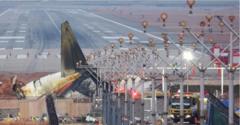
Aviation experts are delving into the tragic plane crash in South Korea that claimed the lives of 179 people, with particular scrutiny on an unusual concrete wall located close to the runway at Muan International Airport. Footage revealed that a Jeju Air plane, after losing control, collided with this wall approximately 250 meters from the runway end, igniting flames on impact.As authorities investigate the circumstances surrounding the nation’s deadliest aviation disaster, air safety specialist David Learmount emphasized the critical role the wall may have played in the crash. He stated that had this "obstruction" been absent, it is plausible that most, if not all, passengers and crew would have survived. The flight's pilot had initially reported striking a bird, which led to an aborted landing, prompting a request for landing from an alternate direction. The aircraft ultimately touched down far along the 2,800-meter runway, apparently without deploying its landing gear. According to Learmount, the landing was executed as effectively as could be expected given the aircraft's compromised state, remarking that substantial damage occurred only during the wall collision.Christian Beckert, a seasoned Lufthansa pilot, described the wall as "unusual" in the context of aviation design, noting that it is atypical for such obstacles to exist so close to an airport runway. The wall is reportedly a support structure for a localiser navigation system, designed to assist pilots during landing procedures, and stands 4 meters high, covered in dirt to maintain its elevation in relation to the runway.While South Korea's transport ministry claimed that similar structures are present at other domestic and international airports, they will reconsider the construction material used, which could have potentially resulted in a safer impact. Expert Chris Kingswood, with decades of piloting experience, pointed out that obstacles near runways should ideally be designed to break away upon collision to minimize injury. The rigidity of this structure raised concerns regarding its compliance with industry standards.As investigators analyze the incident, questions remain regarding the pilot's awareness of the barrier, especially considering the plane approached from an unconventional direction. Aviation analyst Sally Gethin underscored the urgent need to ascertain whether the pilots were informed about the presence of the wall and if air traffic control directed them to alter their approach. With numerous inquiries still to be answered, the investigation into the Muan International Airport crash continues to evolve as experts uncover critical insights into aviation safety.