In brief
Under Latvia’s first rotating presidency, the UN Security Council will make the peace and security implications of artificial intelligence a central theme for November. A high‑level debate on conflict resolution in a rapidly changing technological era and a newly formed Informal Expert Group on emerging threats are scheduled, while routine items such as peacekeeping mandates and judicial elections will continue.
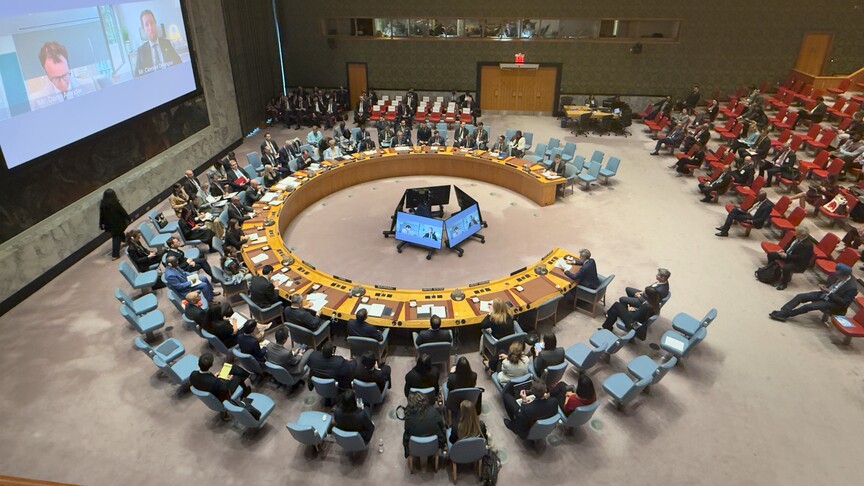
In a strategic pivot toward the intersection of technology and global security, the UN Security Council announced on 3 November that it will prioritize the evaluation of artificial intelligence (AI) and emerging technologies for their impacts on peace and security during Latvia’s first‑ever rotating presidency of the 15‑member body.
AI—software that processes, analyses and learns from data to perform tasks that normally require human intelligence—has increasingly been implicated in modern conflict dynamics. Analysts argue that AI tools can both protect civilians, peacekeepers and humanitarian workers and, if misused, enable new forms of cyber and information warfare. The Council’s shift reflects a long‑standing concern that emerging technologies are reshaping the conditions of warfare and conflict prevention.
Latvian Permanent Representative to the UN, Sanita Pavluta‑Deslandes, outlined a key event under the Latvian presidency: a high‑level ministerial open debate on 24 November titled Conflict resolution in an era of rapid technological change. She said the debate will probe how “the emerging tools affect the protection of civilians, peacekeepers, humanitarian personnel and media workers alongside conflict prevention and peacebuilding.”
While the Council will examine AI’s influence, Pavluta‑Deslandes emphasized it would not attempt to create global AI regulatory frameworks or governance systems. She noted that “wider rulemaking remains the responsibility of the UN General Assembly.” Instead, the Council will rely on briefings from technology firms and experts to inform its deliberations.
To coordinate technical input, the Council has established a new Informal Expert Group on emerging threats and technological change. The group was created jointly with Greece and joined by ten Council members. It is slated to hold its inaugural session in November, working to synthesize findings from the technology sector, AI companies and independent scholars.
The November agenda, however, extends beyond AI. Latvia’s presidency will also address Russia‑Ukraine tensions and the Middle East hotspots, while the Council received an official letter from Turkey nominating its ambassador, Feridun Sinirlioglu, for the position of UN Secretary‑General. Pavluta‑Deslandes said the letter had already been disseminated to the Security Council and the General Assembly, and that “indicative straw polls will proceed during November,” underscoring the urgency with just two months remaining before the five‑year term begins.
Routine items that will continue are peace‑keeping mandates and judicial elections. These standard components of the Council’s work provide continuity as the technical mandate of AI expands.
In parallel to the Council’s work, Latvia is reinforcing its own technological infrastructure. On 9 September, telecommunications company Tet will open a large data centre in Salaspils, providing increased capacity for high‑speed computing and data storage in a country that is positioning itself as a hub for digital innovation in the Baltic region.
Reports from the Security Council Monthly Forecast for November 2026 confirm that Latvia will hold the presidency. The Forecast notes that Latvia plans “to organise an open debate on emerging technologies and security under… [subject to further details],” aligning with the nation’s broader agenda to celebrate its 1918 declaration of independence in November.
The convergence of AI policy discussion on the global stage with Latvia’s domestic data‑centre investment illustrates how small nations can leverage technology to influence international security debates. As the Council’s deliberations proceed, the effectiveness of cross‑disciplinary input—from AI ethicists to defence strategists—will determine whether the security architecture evolves to anticipate the risks and opportunities posed by intelligent systems.