In brief
At the 13th Conference of the Parties to the UN Convention against Transnational Organised Crime, UAE officials from the Ministry of Interior convened sessions that highlighted AI‑driven security, expanded digital threat responses and reinforced international cooperation. Bilateral talks with nations ranging from Australia to Azerbaijan aimed to strengthen information exchange and joint operations across a spectrum of organised‑crime domains.
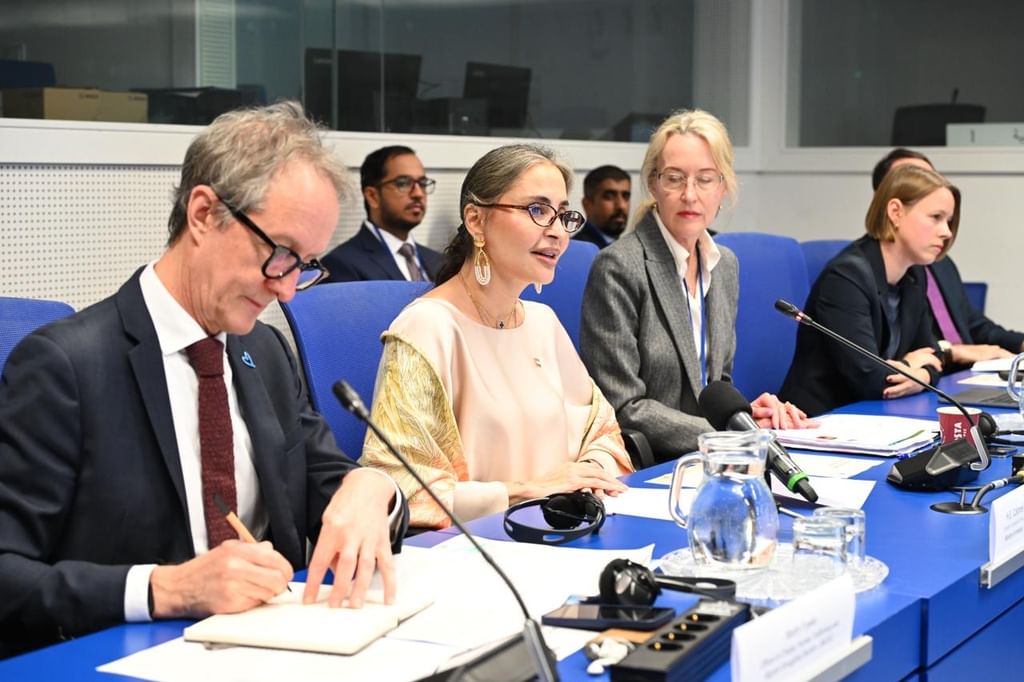
The United Arab Emirates intensified its global anti‑organised‑crime strategy during the 13th Conference of the Parties to the United Nations Convention against Transnational Organised Crime (UNTOC COP13) held in Vienna on 29 October 2026. Through the Ministry of Interior, UAE representatives hosted a series of sessions that merged law‑enforcement expertise, private sector capabilities and emerging technology, with the objective of improving the effectiveness of cross‑border investigations and the detection of fraud, environmental offences and child exploitation.
Artificial Intelligence as a Security Tool
The Ministry’s flagship event, titled "From Cooperation to Action: How Law Enforcement Agencies, International Organisations, and Private Sector Partners Can Contribute to Combating Organised Fraud", emphasized how AI can be combined with human expertise to spot patterns in financial transactions and digital communications. The conference addressed fraud, environmental crime, child exploitation and violence against women, and underlined the regulatory framework required for deploying AI safely in security operations. By highlighting best practices for AI integration, the UAE positioned itself as a leader in data‑driven crime prevention.
In an Australian‑led session named "Adaptation and Expansion: The Evolving Organised Crime Ecosystem for Human Trafficking for Fraudulent Purposes," UAE officials analysed how criminal networks exploit vulnerable populations to finance large‑scale cyber fraud. The discussion spanned the criminal ecosystem from recruitment to the laundering of illicit proceeds, providing a comprehensive overview that could inform future policy and investigative protocols.
Environmental Crimes and Climate‑Related Illicit Activity
Responding to growing evidence of environmental crimes intersecting with organised illicit networks, the Ministry collaborated with Azerbaijan to organise "Dubai‑Baku‑Abu Dhabi‑Vienna Route: From Global Commitment to Action Against Environmental Crimes". The session highlighted the International Law Enforcement Initiative for Climate (I2LEC) – a coalition of specialised agencies working to protect natural resources from illegal exploitation. The UAE also participated in Brazil’s session on "Strengthening Global Action Against Environmental Crimes" and Peru’s session on "Illegal Mining, Deforestation, and Transnational Organised Crime: Enhancing International Law Enforcement Cooperation". In each case, the focus was on tighter international cooperation and joint operations to halt environmental damage.
Germany’s contribution – "Environmental Crimes as a Security Challenge" – underscored the strategic security implications of ecological degradation. By linking environmental harm to the enabling of other forms of organised crime, the session portrayed climate‑related offences as a national security priority, a viewpoint that the UAE echoed in its own statements.
Child Protection and Digital Threats
The Ministry’s engagement with child protection issues was evident in a Vietnamese event focused on "Online Exploitation and Sexual Abuse of Children and AI‑Generated Child Sexual Abuse Material". UAE officials presented their "AI for Safer Children" initiative, describing how machine‑learning tools can detect and filter disallowed content and assist in victim identification. The initiative was praised as a model for international collaboration against child exploitation.
The Ministry also co‑chaired the High‑Level Group on Digital Threats, Organised Crime, and Violence Against Women and Girls, partnering with Chile, the Netherlands and Nigeria. The group facilitated dialogue on cyber extortion, technology‑enabled human trafficking, support mechanisms for victims and integration of the UAE’s contributions to the Women, Peace and Security agenda. Participants agreed on enhancing legal frameworks and victim‑centric procedures across borders.
Bilaterals and Joint Operations
Parallel to the multi‑party sessions, UAE Ministry officials held bilateral consultations with counterparts from Colombia, Sweden, Albania and Australia. These meetings focused on improving information sharing and establishing joint operations frameworks. The discussions emphasised the importance of real‑time data exchange, common investigative protocols and shared capacity‑building initiatives. By forging alliances across diverse jurisdictions, the UAE aimed to create a more resilient global response to complex criminal networks.
In sum, the UNTOC COP13 provided a platform for the UAE to showcase a multi‑layered approach to organised crime. By integrating artificial intelligence, strengthening environmental crime regimes, establishing child‑protection mechanisms and fostering bilateral cooperation, the country moved beyond diplomatic rhetoric toward tangible, technology‑enhanced collaboration. As organised crime continues to evolve, the UAE’s commitment to leveraging science and cross‑border partnerships signals a robust strategy that other nations may emulate.