In brief
The Bundibugyo Ebola outbreak reached more than 10,170 confirmed cases in the DRC, Uganda, Kenya, and Nigeria, prompting an emergency meeting of African health ministers with the Africa CDC and WHO. Leaders highlighted significant gaps in medical supplies, surveillance, and therapeutics, while Namibia intensified border surveillance and public hygiene campaigns.
The Bundibugyo strain of Ebola has surged in the African Great Lakes region, crossing borders and exceeding 10,170 confirmed cases across the Democratic Republic of the Congo, Uganda, Kenya, and Nigeria. African health ministers convened an emergency virtual meeting with the Africa Centers for Disease Control and Prevention and the World Health Organization on October 29, 2026, to coordinate a continental response.
During the meeting, Africa CDC Director‑General Jean Kaseya noted that the outbreak has grown from a national crisis into a continental health security test. He emphasized that insecurity, complex humanitarian situations, a lack of medical countermeasures, and limited funding compound the problem. Kaseya stated that confirmed cases have reached 10,172, with fewer than 4,932 deaths and a case‑fatality rate of 48.5 %, while 2,727 patients have recovered.
WHO Director‑General Tedros Adhanom Ghebreyesus, speaking through a recorded message, described the outbreak as “extremely serious and difficult.” He stressed that the situation in the DRC is not isolated; it represents multiple outbreaks across a vast and complex area that require sustained simultaneous responses.
Kenyan health officials highlighted the country’s experience as an example of early detection and rapid response. Patrick Amoth, director‑general for health in Kenya’s Ministry of Health, described Kenya’s approach as a "whole‑of‑government and whole‑of‑society" effort and identified gaps in health workforce safety, cross‑border surveillance, and reliance on donated medicines in the absence of licensed vaccines or specific therapeutics.
Amoth underscored the need for Africa to close these gaps, noting that cross‑border spread bypasses both surveillance and contact‑tracing systems. He called for the consolidation of imported medical supplies and the acceleration of vaccine access, which remain uncertain amid current procurement difficulties.
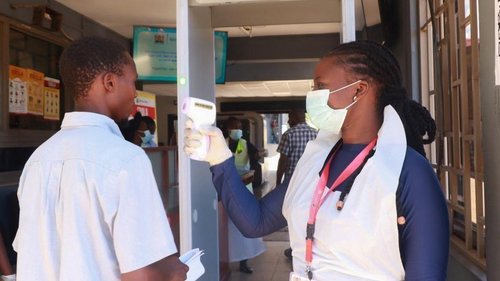
In a related development, Namibia announced enhancements to disease surveillance and preparedness at points of entry. Although no suspected or confirmed cases have yet been reported in the country, the Ministry of Health and Social Services has increased staff training, expanded early‑detection protocols, and bolstered rapid‑response capacities to curb potential spillover.
Namibian officials warned that the Bundibugyo outbreak, declared in the DRC on May 15, 2026, has raised serious cross‑border transmission concerns. They emphasized the importance of maintaining robust surveillance and fast medical care in the absence of specific vaccines and therapeutics.
Following the expansion of the outbreak into Kenya, Nigeria, and the DRC, the ministry urged the public to practice good hand hygiene, avoid contact with suspected or confirmed patients, and seek immediate medical attention if symptoms arise following potential exposure. Travelers or contacts with recent exposure were advised to inform health‑care personnel promptly.
The African Union’s ECOWAS region has adopted protocols that establish a unified monitoring network, enabling real‑time data sharing among member states. The new network focuses on genomic sequencing of virus samples to track mutation patterns across borders.
Concurrently, the Africa CDC is coordinating a pooled regional vaccination trial to evaluate the efficacy of experimental monoclonal antibodies. The trial will recruit participants from the four affected countries, with WHO providing technical guidance.
Recent modeling by the Africa CDC indicates that an aggressive, synchronized containment strategy—including rapid case isolation, contact tracing, and community engagement—could halve the projected fatality rate within six months if resources are scaled up accordingly.
In a statement issued in tandem with the meeting, the Africa Ministry of Health in the DRC reaffirmed its commitment to strengthening laboratory capacities, ensuring secure supply chains for personal protective equipment, and training local health workers on infection prevention controls.
Kenya’s Ministry of Health has intensified community outreach by deploying mobile health units that deliver educational materials on Ebola transmission and safe burial practices. The units also provide point‑of‑care testing kits and training to community health volunteers.
Meanwhile, the WHO has called for international solidarity and financial pledges to close gaps in medical counter‑measure access. The organization highlighted the need for a coordinated procurement strategy that considers both public and private sectors.
In a move to galvanize public trust, Namibia’s health ministry opted to disseminate guidance exclusively through official communications channels, including the WHO and Africa CDC, and urged the public to remain calm and avoid rumor‑driven panic.
At the regional level, the African Union’s Health Dialogue program has mobilized a task force that will oversee cross‑border surveillance using satellite data and geospatial mapping to predict high‑risk exposure corridors.
As of October 26, the World Health Organization reported cumulative figures of 10,151 confirmed cases and 4,930 deaths in the DRC, Kenya and Nigeria. The data underscores the need for a sustained, coordinated containment effort.
The outbreak’s case‑fatality rate, as reported by Kaseya, remains at 48.5 %, a figure that reflects the challenges of rapid diagnosis and timely treatment in resource‑constrained settings.
Health officials are urging international partners to accelerate the development and distribution of a licensed vaccine while investing in local manufacturing capacities to ensure equitable access.
Finally, the emergency meeting ended with a unanimous call for a regional coalition that will share resources, expertise, and surging data in real time, thereby illustrating an unprecedented level of solidarity among African nations in the face of a rapidly expanding epidemic.