
In brief
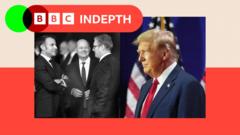
As Donald Trump reclaims the White House, Europe's challenges and vulnerabilities come sharply into focus, signaling a potential shift in transatlantic dynamics.
In a world already fraught with economic struggle and political volatility, Donald Trump's return to the White House has elicited a complex response from European leaders. Observers note that while they are grappling with their own issues, such as stagnating economies and populist uprisings, the continent finds itself fixated on Trump's impact as he begins his second term. "It's insane! The country feels broken," says Iris Mühler, a German engineering teacher, voicing the frustration of many who feel overshadowed by the ongoing Trump narrative in global discourse.Unlike previous years, Europe's traditional powers, particularly Germany and France, are in a weakened and fragmented state, creating a cautious backdrop for Trump 2.0. Trump, who conducts international relations with a businessman's mindset, has made clear his transactional approach to alliances, often threatening to withdraw support from established partnerships like NATO unless Europe fulfills his calls for increased defense spending.The situation is precarious as Trump's disdain for what he considers unfair trade practices looms large. His proposed tariffs on foreign imports could spell disaster for Germany, leading to potential economic repercussions throughout the eurozone. Trump has made incendiary remarks about imposing hefty tariffs on European goods, further straining economic relations as the EU struggles to assert its position against an aggressive U.S. stance.Concerns about Trump's previous animosity toward Germany remain potent. Ian Bond from the Centre for European Reform maintains that Germany might remain the primary target of Trump's ire. Public rarefied comments about Mercedes and trade deal threats articulate a hostile environment that European leaders are loath to navigate without a cohesive strategy.Complicating circumstances arise from Trump's unpredictable rhetoric and the intertwined nature of trade and defense policies. His recent threats against NATO allies and distinctly aggressive posture towards Denmark signal a readiness to wield economic pressure for geopolitical ends, leaving Europe wary of how to respond.While some leaders, notably France's Emmanuel Macron, seek to flatter Trump's ego to secure favorable outcomes, others encourage a more strategic flow of resources towards the U.S., exemplified by proposals from the European Central Bank for a "cheque-book strategy." However, this raises questions about Europe's reliance on the U.S. amidst shifting global paradigms.Another layer of complexity emerges from the growing influence of tech giants like Elon Musk on European public opinion. Musk’s anti-establishment sentiments and alignment with right-leaning parties could complicate diplomatic dialogues with European leadership who maintain different ideological foundations. Public distrust of both Trump and Musk complicates their potential influence in European political discourse.Strategically, Europe finds itself at a crossroad. Leaders are advocating for greater self-sufficiency and a unified defense strategy, while also acknowledging the need for increased military and economic spending under the looming shadow of Trump's unpredictable presidency. Macron advocates for a unified European defense policy, warning that internal fragmentation leaves Europe vulnerable.As Trump steps back onto the global stage, the dynamics of the EU-U.S. relationship appear to be at a critical inflection point, raising profound questions about transatlantic unity and strategy. With regional issues in flux and global power dynamics shifting, the months ahead will reveal how Europe's leaders traverse this landscape, balancing the need for stronger defense strategies against the risky unpredictability of transatlantic relations with Trump. The next chapter promises to be a defining moment for both sides of the Atlantic.
