In brief
Nick Brauns, co‑editor‑in‑chief of the German daily junge Welt, argues that German audiences require deeper, human‑centered journalism to comprehend China’s economic rise and global role. He stresses the importance of direct dialogue with Chinese voices, inclusion of Global South perspectives, and AI as a supporting tool rather than a replacement. His remarks come ahead of the 7th World Media Summit in Beijing, a platform for media professionals to share experience and deepen mutual understanding.
In an interview with Xinhua on 8 November 2026, Nick Brauns, co‑editor‑in‑chief of the German daily junge Welt, urged German media to adopt a more human‑centered approach if the country is to fully grasp China’s economic rise and its role on the global stage. The conversation took place in Berlin, just as the 7th World Media Summit was scheduled to begin in Beijing on 5 November.
Brauns said that today's German public relies heavily on mainstream media coverage and official statements to shape their perception of China. According to him, this reliance delivers a narrow view that misses the economic forces behind China’s rapid development and the larger geopolitical dynamics at play. "Many Germans want to know more about China’s history, economic development and international role," he said. "But their understanding is limited by a narrow set of voices."
He emphasized that reporting should progress beyond second‑hand accounts. "Direct contact helps us challenge one‑sided narratives and understand other societies in their full complexity," Brauns stated. Here, human‑centered journalism refers to stories that foreground the lived experiences of ordinary people, rather than abstract policy analysis – a method especially useful when analysing large data streams about economic indicators or trade flows.
Speaking about the role of technology, Brauns highlighted that artificial intelligence – AI – is a powerful asset for journalists today. At junge Welt, the newspaper uses AI tools mainly for translation and research, allowing reporters to sift through thousands of documents in multiple languages within hours. The system can automatically flag emerging trends, such as the increasing competitiveness of Chinese electric vehicles abroad. However, Brauns stressed a clear hierarchy between AI and the human mind. "AI should be a tool, and it should be a tool that we also control," he said. "It should not be more than that."
While AI can accelerate fact‑checking and data visualisation, Brauns warned against over‑reliance. "Human beings write for human beings," he reminded. The principle is that technology must serve editorial judgment, not replace it. At the same time, German media can harness AI’s capacity to identify voices from the Global South – corners of the world that often remain overlooked in Western coverage.
“We need to pay greater attention to voices from the Global South,” Brauns added. He sees the Global South not only as a geographic designation but as a community whose socio‑economic realities challenge Euro‑centric narratives. By incorporating testimonies from these regions, journalists can reveal the multiplicity of perspectives that shape global policy debates. Brauns envisions a future where AI helps identify and connect with storytellers across continents, ensuring that diaspora experiences are represented in mainstream newsrooms.
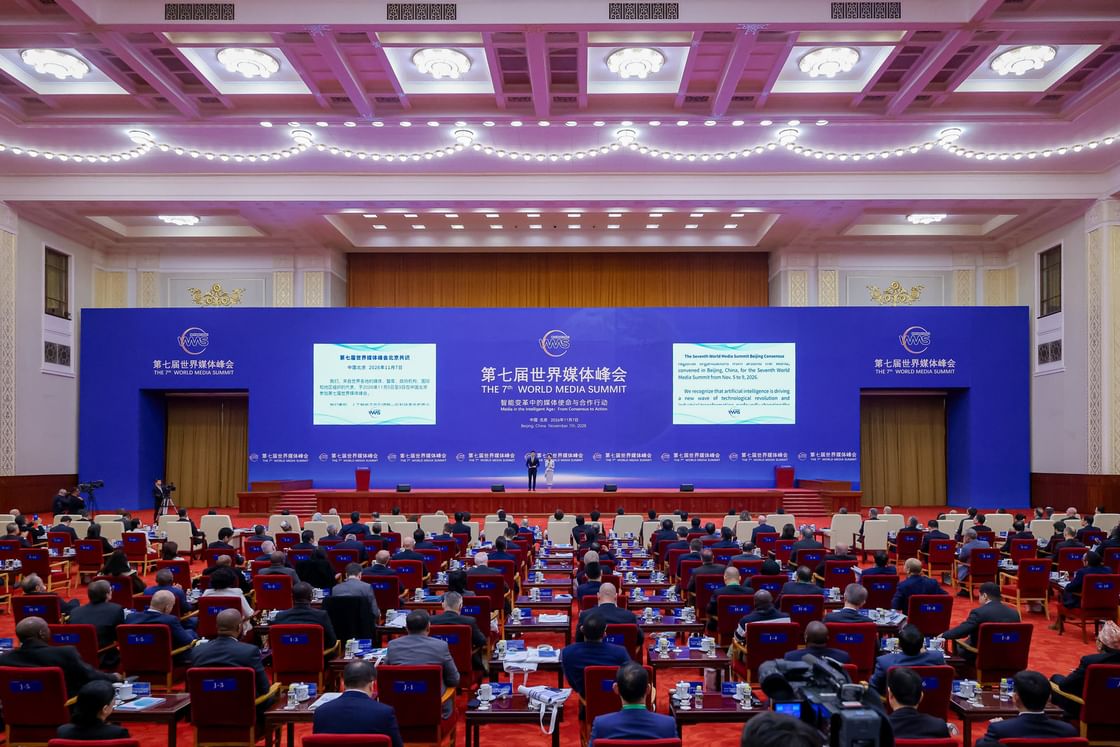
In this context, the 7th World Media Summit in Beijing becomes a pivotal forum for such cross‑cultural experimentation. Brauns described the summit as an opportunity for media professionals from different political systems to share experiences and deepen mutual understanding. “The world media summit offers a valuable platform for media professionals from different countries and social systems to share experience and deepen mutual understanding,” he said. The conference, running from 5 to 9 November, gathers editors, journalists, and technology specialists to debate the future of media in an era where data, AI, and human stories intersect.
From a scientific perspective, Brauns’ remarks touch on several key trends. First, the reliance on AI for large‑scale data mining aligns with the capacity of quantum computing platforms – such as those used by Quanta Report – to analyze terabytes of text in real time. Second, the insistence on a human‑centered editorial process underscores the importance of algorithmic accountability; even as AI abstracts patterns from data streams, human oversight ensures ethical framing and contextual nuance. Finally, Brauns’ advocacy for Global South voices highlights the need for inclusive corpora that reflect diverse linguistic and cultural datasets.
As the 7th World Media Summit draws nearer, Brauns remains optimistic that the dialogue between technology and human judgment will evolve in a way that benefits both German readers and the international community. He envisions a media ecosystem where AI supports journalistic investigations, while editors and reporters interrogate the data’s implications through nuanced storytelling. His call – to pair advanced analytic tools with grounded human perspective – reflects a growing consensus that technology alone cannot replace the craft of journalism; instead, it must coexist with a commitment to empathy, authenticity, and global understanding.