In brief
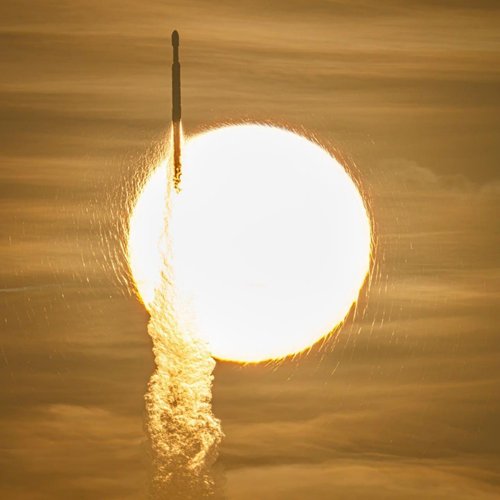
NASA's Europa Clipper mission, launched from Cape Canaveral, aims to decipher if Jupiter's moon Europa harbors life. With a 2030 target arrival, the spacecraft will analyze the moon's potential ocean and ice-crusted surface, possibly reshaping our solar system's life understanding.
---In a significant leap towards uncovering extraterrestrial life, NASA's Europa Clipper spacecraft has embarked on its journey from Cape Canaveral, with the mission to explore one of Jupiter's icy moons, Europa. The launch, initially delayed by Hurricane Milton, marks the beginning of a 1.8 billion-mile voyage that will culminate in 2030.The objective is to investigate Europa, believed to harbor a vast ocean beneath its icy crust, potentially doubling Earth's water volume. Should Europa host life, it implies a separate origin from Earth, signaling that life might be more common in the universe than previously thought.Developed by NASA's Jet Propulsion Laboratory, the Europa Clipper will employ advanced instruments to map Europa's surface and study its unique "plumbing" systems. These include ice structures resembling Earth's subduction zones and magma chambers. Notably, the mission will navigate Europa's plumes, hopefully shedding light on its elusive surface and subsurface composition.Radiation poses a significant challenge, with the spacecraft expected to endure levels equivalent to a million X-rays. Protective measures, such as a heavily shielded electronics vault, will mitigate this risk.The Europa Clipper leverages the gravitational "sling-shot" effect from Earth and Mars, allowing it to traverse space efficiently, albeit slowly, as it overtakes the European JUICE mission en route to Europa.Scientists, while cautious about expectations, prioritize finding evidence of habitability over discovering complex life forms. The mission addresses essential conditions for life: liquid water, a heat source, and organic material, all stable over time.As the international team spearheading this mission anticipates new discoveries, Europa Clipper stands as a testament to human curiosity and the spirit of exploration, pushing the boundaries of cosmic knowledge without immediate profit—only the promise of unraveling long-held secrets of the universe.