In brief
A Falcon Heavy rocket carried NASA’s Nancy Grace Roman telescope to a million‑mile orbit around the Sun, where it will chart the cosmos with a field of view 100 times larger than Hubble. Astronomers expect it to discover tens of thousands of new exoplanets and map billions of galaxies, offering fresh insights into dark matter, dark energy and the universe’s expansion. Named after the “mother of Hubble,” the mission carries a five‑year primary life span with hopes of a decade of operation.
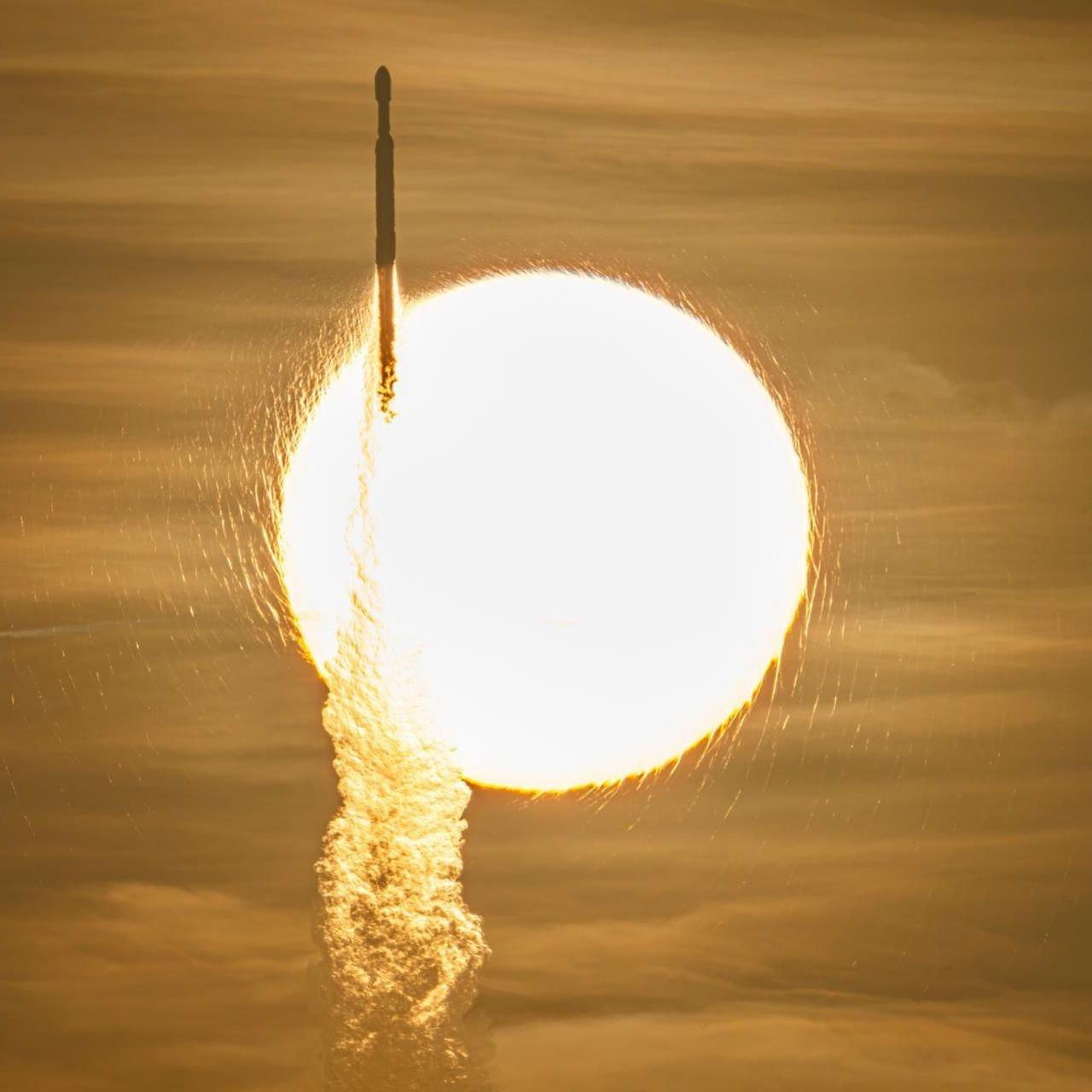
In a Sunday morning launch from Kennedy Space Center, NASA fired up the Falcon Heavy with the new Roman telescope. The spacecraft is poised to survey the universe for dark energy phenomena, exoplanets, galaxies and black holes.
The Roman telescope has a field of view 100 times larger than Hubble and the James Webb Space Telescope, enabling it to sweep a broader swath of the sky each night.
After engines cut off it will travel around a million miles from Earth to position itself for extended observations.
"Roman is going to change the way we look at the Universe," said NASA administrator Nicky Fox.
Project manager Jackie Townsend described the flight as glorious and magnificent after the rocket’s attitude after separation.
Scientists anticipate discovering tens of thousands, perhaps 100,000 new exoplanets—planets orbiting stars beyond the Sun—which could help answer whether we are alone in the cosmos.
NASA’s James Webb Observatory, also launched in 2021, sits in a similar orbit, while Hubble hovers just 300 miles above Earth’s surface.
Lead astronomer Jenifer Millard notes that Roman will be four times farther from Earth than the average distance to the Moon, reducing infrared interference for its infrared cameras.
The telescope will help map billions of galaxies and elucidate the role of dark energy and dark matter, which together are thought to comprise about 95% of the universe.
Dark energy is believed to drive cosmic expansion, whereas dark matter provides the gravitational scaffolding for cosmic structure.
NASA aims for a five‑year primary lifespan, with hopes of extending operations to ten years.
Named after Nancy Grace Roman, NASA’s first chief astronomer and the "mother of Hubble," the mission honors her legacy of advancing space science.