In brief
The Bundibugyo strain of Ebola has surpassed 10,000 confirmed cases across four African countries, prompting an emergency meeting by African health ministers, Africa CDC, and WHO. Officials cited vast spread, high fatality rate, and shortages of medical countermeasures as key challenges, calling for heightened readiness and regional solidarity. Early containment efforts in Uganda, Kenya, and Nigeria are being leveraged while new gaps are identified.
The Bundibugyo strain of Ebola has crossed the 10,000‑case threshold in just five months, prompting an emergency virtual meeting on October 29 that gathered African health ministers, Africa Centers for Disease Control and Prevention (Africa CDC), and the World Health Organization (WHO). The conference, held online, sought to coordinate a continent‑wide response to a crisis that has eclipsed 10,172 confirmed cases, 4,932 deaths, and 2,727 recoveries across the Democratic Republic of the Congo, Uganda, Kenya, and Nigeria.
Data Overview and Epidemiological Context
Confirmed case counts and mortality numbers, released by Africa CDC Director‑General Jean Kaseya, indicate a case fatality rate of 48.5 percent – the proportion of deaths among confirmed cases, a metric that underscores the virus’s lethality. The majority of symptoms have appeared in the DRC’s eastern provinces, with spill‑over cases reported in neighboring Uganda and Kenya, and a single introduction into Nigeria that has since been contained through medical evacuation.
Leadership Voices on the Crisis
Jean Kaseya highlighted the shift from a national to a continental emergency. “The main priority today in our continent is to stop Ebola,” he said, adding that insecurity, complex humanitarian situations, a lack of medical countermeasures, and limited funding were worsening the situation.
WHO Director‑General Tedros Adhanom Ghebreyesus, speaking through a pre‑recorded message, described the outbreak as “extremely serious and difficult.” “This outbreak in the DRC is not a single outbreak in a single place. It is many outbreaks across a vast and complex area, requiring a sustained response everywhere at the same time,” he explained.
Patrick Amoth, Kenya’s Ministry of Health Director‑General, praised Kenya’s “whole‑of‑government and whole‑of‑society” response but warned of critical gaps. “We have seen health‑workforce infections, the cross‑border spread of cases bypassing surveillance and contact tracing, and Africa’s reliance on uncertain donated medicines amid a lack of licensed vaccines or specific therapeutics,” he stated.
Political and logistical challenges were also raised. The African continent has historically depended on donated antiviral drugs such as ZMapp and monoclonal antibodies, yet the scale of the current outbreak outstrips available supplies. The Kinetic models run by Africa CDC use large‑scale datasets to project that, without new vaccine deployment, case counts could exceed 12,000 by early 2027.
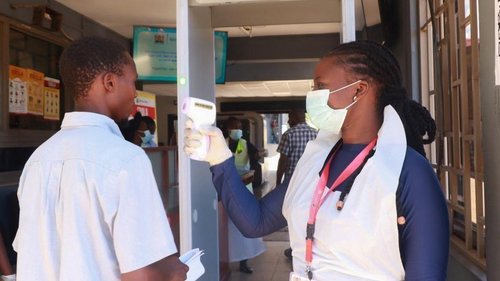
Cross‑border surveillance remains a persistent weakness. In Nigeria, for example, the country’s WHO office announced a 42‑day monitoring period that must be completed before it can declare itself Ebola‑free. This is a procedural step to ensure no lingering infections exist after the first confirmed case was medically evacuated.
The U.S. Centers for Disease Control and Prevention (CDC) contributed technical expertise in outbreak analytics, and the modelling community within the African Union is collaborating to refine predictive equations for case trajectories. Early containment efforts in Uganda and Kenya have been praised for rapid vector‑control measures, contact‑tracing rigor, and the deployment of ring‑vaccination trials for the mRNA‑based EBOV vaccine candidate, although official uptake rates remain limited.
Even as national teams secure containment in one region, the spread of the viral genome across borders – facilitated by informal trade routes and humanitarian aid movements – underscores the necessity of a coordinated surveillance network. Africa CDC’s data harmonization initiative is currently integrating local health records with regional public‑health hubs to offer real‑time alerts. The system uses Bayesian inference to adjust for under‑reporting and lags in case detection.
Experts call for increased financial mobilization. The European Union’s health emergency funds have been pledged, yet the continent’s total budget allocations still fall short of the projected 50 million USD needed for a sustained countermeasure rollout, including vaccine distribution, therapeutic supply chains, and staff training.
Ultimately, the meeting reinforced that Ebola’s re‑emergence challenges not only public‑health infrastructure but also cross‑border cooperation. African health ministers, citing the rapid spread and high fatality rate, urged “greater solidarity and readiness” to halt the epidemic before it expands further into sub‑Saharan Africa.