
In brief
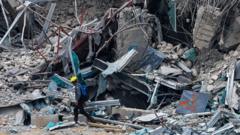
A powerful 7.7-magnitude earthquake struck Myanmar, resulting in over 1,000 fatalities and extensive structural damage. Surprisingly, an unfinished skyscraper in Bangkok also collapsed, raising questions about the nature and reach of seismic activities. The earthquake's shallow depth and significant energy release affected buildings even beyond Myanmar, underlining the need for updated construction standards.
The recent 7.7-magnitude earthquake in Myanmar has left a devastating mark, claiming over 1,000 lives and destroying numerous structures. Myanmar is recognized as a geological hotspot due to its position at the convergence of four tectonic plates—the Eurasian, Indian, Sunda, and Burma microplates. This convergence is responsible for frequent seismic activities in the region, including the devastating tremors currently making headlines.The earthquake's epicenter, located only 10km beneath the Earth's surface, produced an intense shaking felt far and wide, even reaching Bangkok, Thailand, over 1,000 kilometers away. This was not just a distant rumble; it was a seismic event of such magnitude that its energy output exceeded that of the atomic bomb dropped on Hiroshima, as reported by the US Geological Survey.According to Dr. Rebecca Bell, a reader in tectonics at Imperial College London, the movement that triggered this earthquake was a "strike-slip" motion typical of the region's major fault lines, especially the Sagaing fault - a crack stretching over 1,200 kilometers through Myanmar. Such a configuration allows earthquakes to rupture extensive areas, generating significant energy that impacts regions far from the origin.The geological makeup of Bangkok contributed to the extent of shaking felt there. Built on soft soil, seismic waves slowed down and amplified as they traveled, resulting in enhanced ground shaking. Despite the city's location away from the earthquake's epicenter, the repercussions were palpable, leading to the collapse of Bangkok's under-construction high-rise building, the headquarters for the auditor-general's office.Interestingly, this particular building was designed with updated construction codes in mind. Still, it utilized a "flat slab" structure, a method not recommended for earthquake-prone areas. Dr. Christian Málaga-Chuquitaype from Imperial College notes that this design leads to catastrophic failures during seismic events, resulting in a sudden and explosive collapse.While dramatic scenes of swaying skyscrapers were captured on video, the campus was remarkably singular in its collapse. Critics point to Thailand's historical lack of comprehensive earthquake safety regulations, especially before 2009. However, the evolution of construction standards in Bangkok has yet to entirely mitigate the risks associated with such natural disasters.In Myanmar, the overwhelming damage can be partly attributed to systemic issues, as Dr. Ian Watkinson at Royal Holloway University highlights. The country's persistent poverty, political instability, and historical disasters have hindered the establishment and enforcement of building codes capable of withstanding seismic activities. As a result, many buildings in cities like Mandalay are particularly susceptible to destruction during earthquakes.Adding to the risk, areas along the Ayerwaddy River are vulnerable to a phenomenon called liquefaction. During intense shaking, soil loses its structural integrity and behaves like a liquid, leading to potential landslides and building collapses.As recovery efforts unfold, experts advise caution concerning aftershocks, which can occur following the main quake and may pose further risks to already compromised structures. Though commonly smaller than the initial tremors, they still necessitate vigilance and preparedness as communities begin to rebuild.The recent earthquake serves as a grave reminder of the intricate connection between tectonic activity and human infrastructure, raising important conversations about how societies prepare for such natural calamities amidst increasing global seismic risks.
