In brief
At ADIPEC 2026, Abu Dhabi’s Department of Energy inked an agreement with H2G Green Ltd, GasHubUnited, MUZN Energy and CloudEnergi to evaluate liquefied natural gas (LNG) for industrial and commercial sites outside current gas distribution networks. The partnership could channel up to AED 1 billion in investment, diversifying supply, enhancing reliability and supporting the emirate’s low‑emission transition.
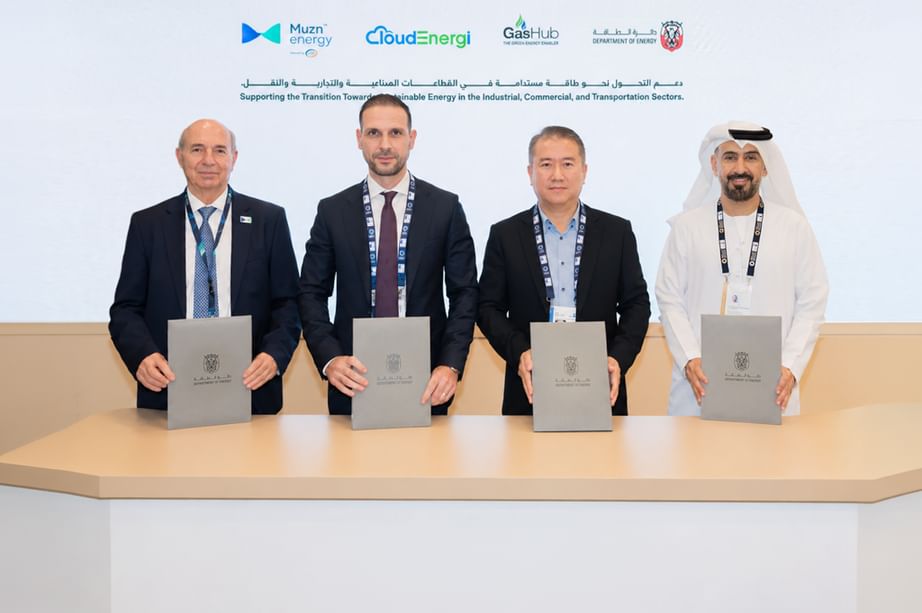
At the Abu Dhabi International Petroleum Exhibition and Conference on 5 November 2026, the Department of Energy (DoE) signed a cooperation framework with H2G Green Ltd, its subsidiary GasHubUnited Utility Private Ltd, MUZN Energy—a subsidiary of SERGAS Group—and Cloud Energy Gas Company (CloudEnergi). The agreement will assess the potential of liquefied natural gas (LNG) as a delivery option for industrial and commercial facilities in Abu Dhabi that lack connection to the existing gas distribution grid, potentially unlocking up to AED 1 billion in investment.
Liquefied natural gas is natural gas that has been cooled to approximately –162 °C, turning it into a liquid that is easier to transport and store in large quantities. By using LNG, Abu Dhabi can tap into a flexible supply chain that is less dependent on traditional pipeline infrastructure.
The partnership aligns with the emirate’s sustainability goals by offering lower‑emission fuels for facilities that otherwise rely on higher‑carbon alternatives. As the DoE noted, LNG can help businesses maintain continuity during supply disruptions while facilitating a transition toward cleaner energy sources.
H2G Green and GasHubUnited bring expertise in decentralized gas solutions and have previously explored modular LNG storage units for remote applications. MUZN Energy’s background lies in supply chain optimization for industrial gas, while CloudEnergi has experience in distribution network design, all of which will contribute to the assessment of deployment routes and logistics.
Under the agreement, the parties will collaborate on multiple fronts: evaluating local LNG production options, designing transport routes to bypass gaps in the current gas network, and establishing regulatory pathways for integration into the emirate’s energy system. The DoE emphasized that this initiative is part of a broader strategy to diversify supply sources, improve resilience, and support Abu Dhabi’s economic and industrial growth.
Financially, the project could stimulate up to AED 1 billion in investment. Such capital would fund the development of LNG infrastructure, including storage facilities, delivery pipelines, and loading slots at industrial sites. The collaboration also anticipates creating new commercial opportunities for the participating companies and further attracting foreign investment into the region’s energy sector.
The agreement reflects Abu Dhabi’s commitment to an integrated, secure, and reliable energy system. By combining private‑sector expertise with public regulatory support, the DoE and its partners are exploring innovative solutions tailored to the evolving needs of vital sectors and the broader economy.
With LNG’s flexible supply chain, facilities that lie beyond current network coverage will gain access to steady gas supplies, encouraging business continuity and growth. At the same time, the deployment of LNG infrastructure aligns with the emirate’s long‑term energy efficiency and sustainability objectives, offering a credible pathway toward lower‑emission operations for the industrial and commercial landscape.