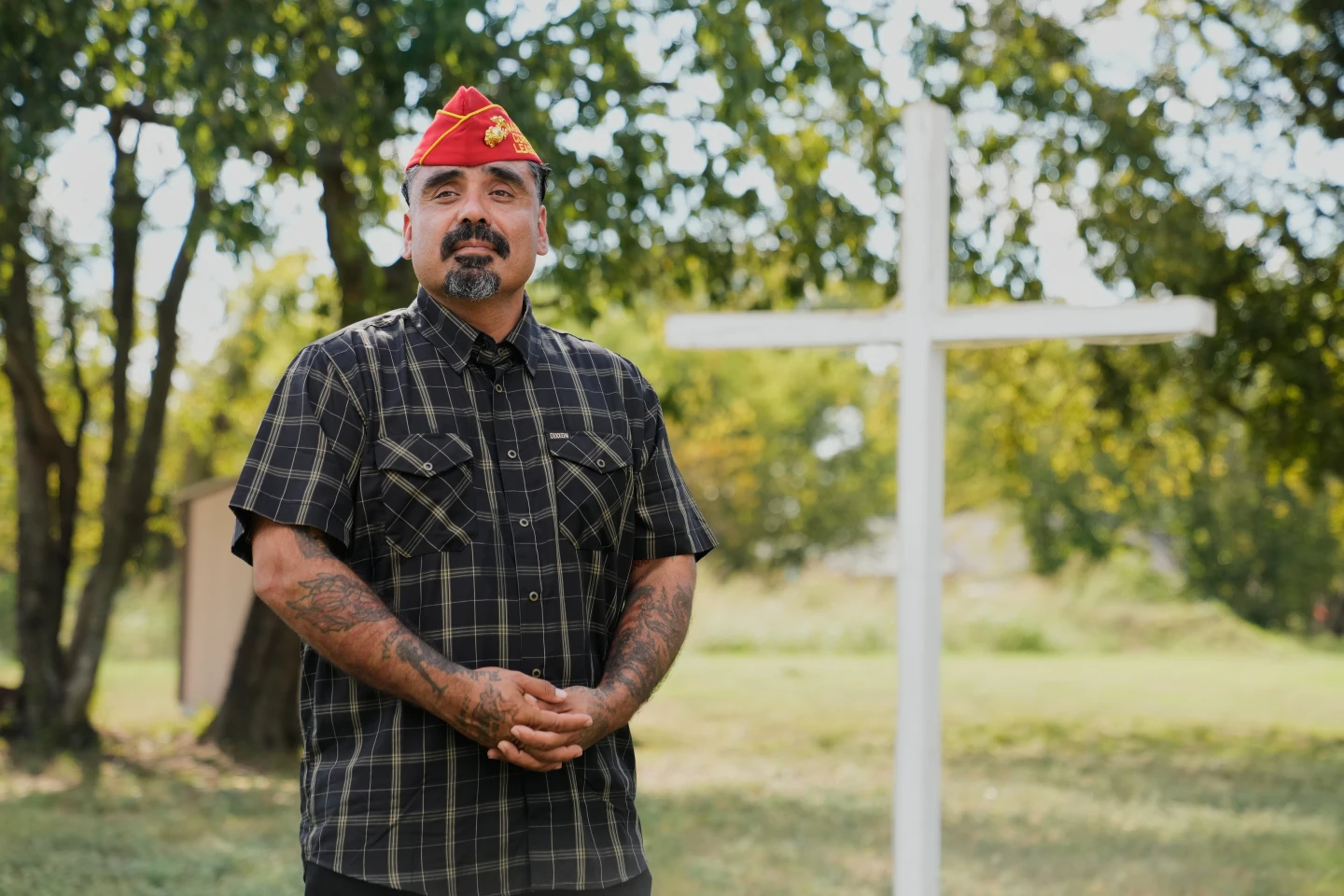
WASHINGTON (AP) — After proudly serving in the U.S. Marine Corps, Julio Torres, who has tattoos of the American flag and Marine Corps insignia, expresses both his pride in his service and his deep concerns about the current political climate that threatens his residency in the United States.
Having endured battles with post-traumatic stress disorder and addiction following his deployment, the 44-year-old has found solace in his new role as a pastor, preaching freedoms to those facing similar struggles. Yet, in his community in East Texas, a sense of freedom feels increasingly elusive.
Under President Donald Trump's administration, Torres, born in Mexico but raised legally in the U.S., is now afraid to leave his home due to fears of deportation. Despite holding a green card and a record of honorable service, immigration authorities detained him last year, leaving him anxious about future enforcement actions. 'Do I want to leave this nation? No. I want to serve it. I want to continue to serve my community,' he stated, questioning the sacrifices made in service of a country that might now force him out.
Torres's case is not unique; estimates suggest that over 100,000 military veterans in the U.S. lack citizenship, and many face increased risks of deportation due to the current immigration agenda. Recent legislative attempts, such as a bipartisan bill introduced in Congress, aim to identify veterans within immigrant communities and provide pathways for lawful status.
The legislation seeks to ease the citizenship application process for veterans, allowing them to apply while in basic training and requiring the Department of Homeland Security to treat military service as a significant factor in any immigration enforcement actions.
However, historical patterns show a troubling trend: many veterans like Torres have become casualties of a system that often overlooks their sacrifices. Torres recalls the anger and betrayal he felt while detained, grappling with the risk of deportation that now hangs over his family.
His story highlights the critical need for reform to ensure that those who have served their country are not punished for the system's complexities and failures. As he laments his situation, Torres emphasizes, 'This is about a veteran. I love my nation. And even though this nation at this moment does not consider me part of this nation, I consider this my homeland.'