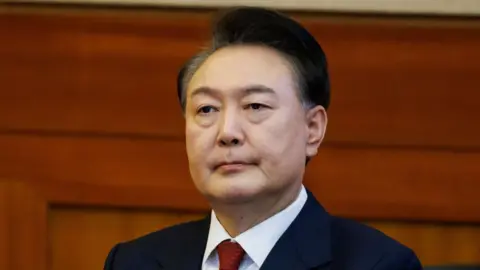
South Korea's beleaguered ex-president Yoon Suk Yeol has been found guilty of abuse of power, falsifying documents and obstructing justice when he tried and failed to impose martial law in the country in 2024. He has also been sentenced to five years in jail.
Yoon is facing three other trials for charges ranging from insurrection to violating campaign law.
The verdict comes more than a year after his short-lived decree threw South Korea into political turmoil, leaving it deeply divided.
On Friday, Yoon was found guilty of obstruction of justice by evading arrest; abuse of power by not convening a cabinet meeting before his martial law declaration; and falsifying official documents. Prosecutors accused him of using state institutions for personal purposes to conceal wrongdoing and undermine constitutional checks and balances.
In January last year, it took some 3,000 police officers, over two attempts, to finally take Yoon into custody for questioning over the insurrection charge. Yoon had mobilised a large group of security officers who formed a human wall inside his residence to block the arrest - a move that a special prosecutor investigating the charge said was unprecedented.
Under South Korea's constitution, sitting presidents are immune from criminal persecution, except for on charges of insurrection and treason. Yoon was charged on 26 January 2025. By then, parliament had voted to impeach him, but he was not yet removed from office. Prosecutors allege that Yoon attempted to subvert the constitution by declaring martial law in the absence of war or any national emergency.
Prosecutors have sought the death penalty, describing Yoon as unrepentant. The rising tension over his martial law decree and the legal proceedings against him have spurred protests across South Korea.
These trials not only seek accountability for Yoon's actions but also reflect ongoing concerns regarding the balance of power in South Korean governance.