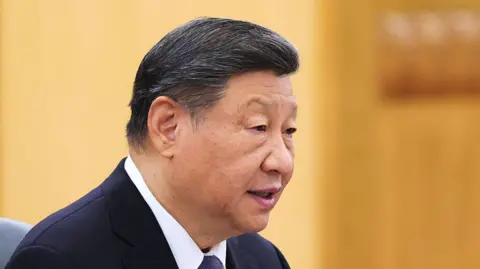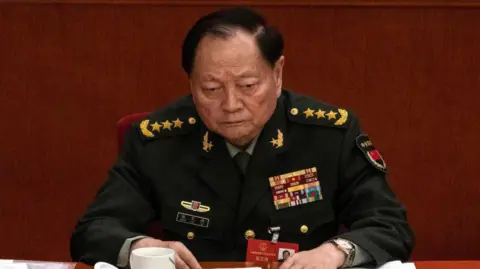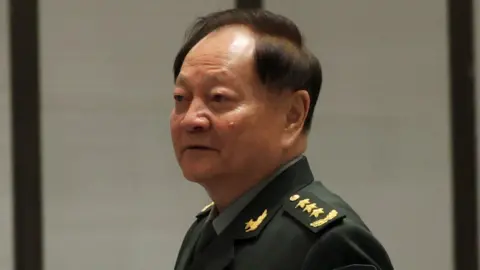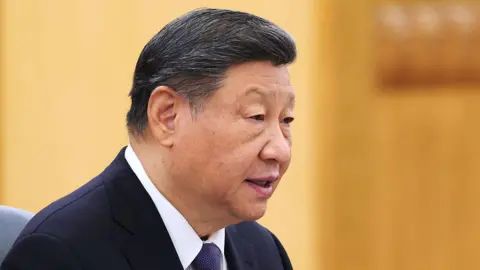
Chinese President Xi Jinping has made a rare public reference to a recent crackdown which saw the country's top military general removed. General Zhang Youxia, who was widely seen as Xi's closest military ally, was removed from his post in January. He was accused of serious violations of discipline and law - typically a euphemism for corruption.
Speaking in a virtual address on Tuesday, Xi said the past year had been unusual and extraordinary, adding that the army had undergone revolutionary tempering in the fight against corruption.
Since coming to power, President Xi has launched waves of anti-corruption drives, which critics say have also been used as a tool to purge political rivals. In his remarks on Tuesday, Xi also noted that the People's Liberation Army (PLA) had effectively addressed various risks and challenges, mentioning that many in the army had gone through in-depth political rectification.
He stated that PLA troops had been loyal to the Party... and proven themselves capable and dependable. These comments come as part of Xi's annual Chinese New Year greetings to the PLA and are significant since he has not mentioned corruption in his greetings since 2022.
Zhang, 75, was vice-chairman of the powerful Central Military Commission (CMC) when he was purged. Along with Zhang, another senior officer, General Liu Zhenli, was also removed from his post.
This latest purge follows a crackdown in October 2025, which saw nine top generals—including some CMC members—removed amid claims of corruption. Records indicate that 14 full-rank generals have faced similar actions in the last three years, resulting in a significant reduction of the seven-member CMC to just two, of which one is Xi himself.
Experts observe that Xi's comments are highly unusual, given that he rarely engages with the press or gives interviews—even to the state media. These remarks appear designed to reassure Party cadres and the public that the government's actions against corruption are justified, especially considering the potential impact on the military's effectiveness in future conflicts.