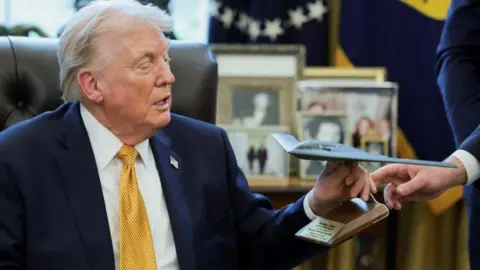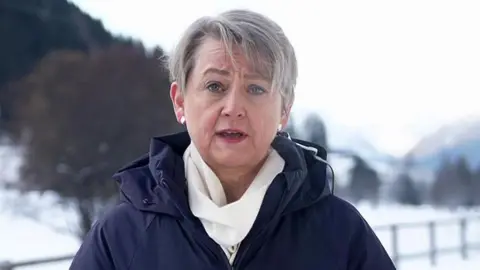
Foreign Secretary Yvette Cooper has announced that the UK will not sign up to US President Donald Trump's proposed Board of Peace amid concerns about Russian President Vladimir Putin's potential role. Speaking to the BBC from the World Economic Forum in Davos, Cooper stated that the UK had received an invitation but would 'not be one of the signatories today'.
Cooper highlighted the board as a legal treaty that addresses broader issues beyond its initial focus on ending the ongoing Israel-Hamas conflict in Gaza. The charter proposed by the White House notably omits mention of Palestinian territories, suggesting an intention to overshadow some functions traditionally held by the United Nations.
Countries including Turkey, Egypt, and Saudi Arabia have confirmed their membership in the board, while Trump claimed that Putin accepted an invitation to join the peace initiative. However, Putin has neither confirmed his participation nor shown immediate willingness to commit to peace discussions regarding Ukraine, according to Cooper.
Cooper expressed support for Trump's 20-point plan aimed at resolving the Gaza crisis but reiterated concerns regarding involving Putin, who has yet to demonstrate any commitment to peace in Ukraine. She stated, 'We will have continuing international discussions including with our allies.'
Amidst tense diplomatic relations, highlighted by Trump's recent tariffs threats against European nations, Cooper welcomed the US's apparent shift on Greenland. Moving forward, UK diplomatic strategy remains protective of its allies and supportive of Ukraine as discussions about peace persist.
The foundational tenets of Trump's Board of Peace indicate an effort to expand beyond Gaza reconstruction, positioning the board as an international body aimed at fostering stability and governance in conflict zones. The engagement of additional countries—including Pakistan, Qatar, and even the Vatican—has intensified the discourse around this controversial initiative.