In brief
President Trump's recent executive order aims to block states from enacting their own AI regulations, with the intent of creating a unified federal approach to artificial intelligence policy. While tech leaders applaud this as a step toward streamlined innovation, critics, including California Governor Gavin Newsom, have denounced it as a move that undermines state rights and public safety. The debate continues as various states have already established their own AI guidelines.
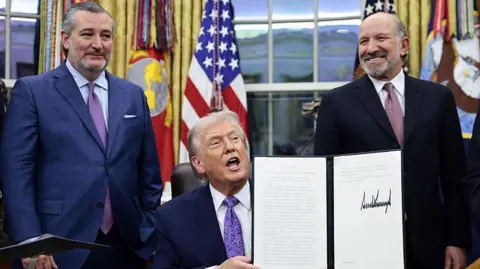
US President Donald Trump has signed an executive order aimed at blocking states from enforcing their own artificial intelligence (AI) regulations.
We want to have one central source of approval, Trump told reporters in the Oval Office on Thursday.
This executive order will equip the Trump administration with the authority to challenge and potentially reject state-level AI regulations deemed excessively burdensome, according to White House AI adviser David Sacks, who noted that the administration will still support regulations aimed at ensuring children's safety.
The new directive is hailed as a victory by major technology firms advocating for consistent national AI legislation, claiming that disparate state rules might stifle innovation and hinder the US's competitive edge against China in the burgeoning AI field.
Conversely, the announcement faces significant criticism. California, home to numerous technology giants, has already implemented its own AI regulations. Governor Gavin Newsom, a vocal opponent of Trump, sharply criticized the order, accusing Trump of corruption and attempting to circumvent state laws that protect Americans from unregulated AI technology.
Earlier this year, Newsom enacted legislation requiring prominent AI developers to formulate plans that address risks associated with their AI applications. Other states, including Colorado and New York, have similarly put regulations in place to manage AI development.
Critics argue that Trump's order undermines the essential prerogative of states to enact protective measures amidst insufficient federal safeguards. Julie Scelfo of Mothers Against Media Addiction asserted that stripping states of their ability to legislate AI protections infringes on their basic rights.
Academic perspectives are mixed; while some argue that numerous conflicting state laws create an unsafe patchwork that stunts innovation, they caution that a solid federal law must also be established to prevent further complications.
The tech lobby group NetChoice expressed support for Trump's initiative, emphasizing their eagerness to collaborate with the White House and Congress in crafting standardized regulations for the industry.