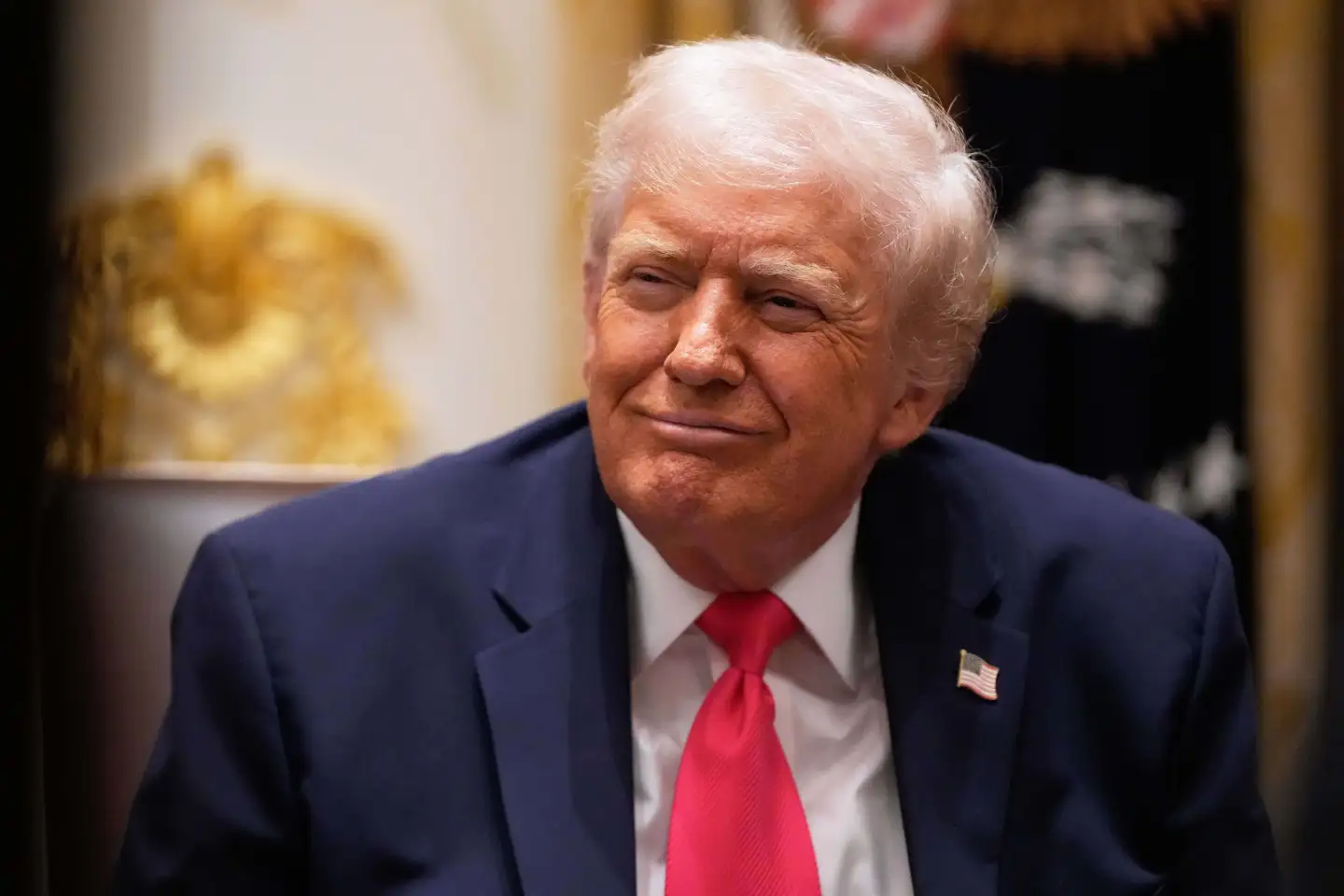
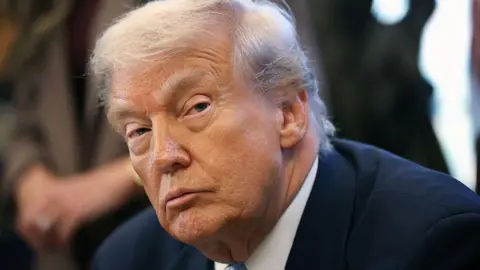
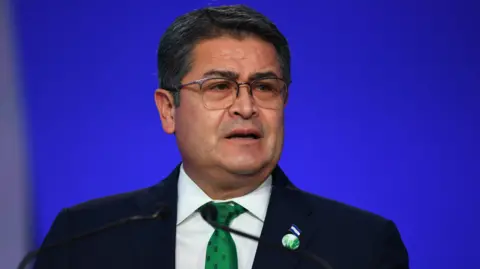
WEST PALM BEACH, Florida – On Friday, President Donald Trump made headlines by announcing his intention to pardon former Honduran President Juan Orlando Hernandez, who was convicted for drug trafficking and weapons charges in 2024, resulting in a 45-year prison sentence. He defended his decision on social media, stating, “according to many people that I greatly respect,” Hernandez was subjected to harsh and unfair treatment.
Hernandez’s 2023 conviction in a U.S. court involved conspiring to import cocaine into the United States. He notably served two terms as the leader of Honduras, a nation of approximately 10 million people.
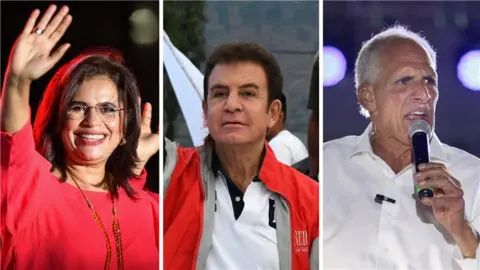
Trump's announcement is intertwined with his support for Tito Asfura in the impending Honduran presidential elections, affirming that the U.S. would back Asfura if he wins. Conversely, he cautioned that if Asfura does not succeed, the U.S. would refrain from further investment, as a poor leadership choice could lead to disastrous outcomes for any nation.
In the backdrop of this political landscape, outgoing Honduran President Xiomara Castro has adopted a leftist approach yet maintained a collaborative stance towards the U.S. She has welcomed visits from high-ranking officials, including Homeland Security Secretary Kristi Noem and former U.S. Army Gen. Laura Richardson, while also easing previously made threats concerning Honduras' extradition treaty and military partnership with the U.S.
Castro’s administration has also facilitated the return of Honduran citizens deported from the U.S. and has acted as an intermediary for Venezuelan nationals awaiting repatriation.
Hernandez’s 2023 conviction in a U.S. court involved conspiring to import cocaine into the United States. He notably served two terms as the leader of Honduras, a nation of approximately 10 million people.
Trump's announcement is intertwined with his support for Tito Asfura in the impending Honduran presidential elections, affirming that the U.S. would back Asfura if he wins. Conversely, he cautioned that if Asfura does not succeed, the U.S. would refrain from further investment, as a poor leadership choice could lead to disastrous outcomes for any nation.
In the backdrop of this political landscape, outgoing Honduran President Xiomara Castro has adopted a leftist approach yet maintained a collaborative stance towards the U.S. She has welcomed visits from high-ranking officials, including Homeland Security Secretary Kristi Noem and former U.S. Army Gen. Laura Richardson, while also easing previously made threats concerning Honduras' extradition treaty and military partnership with the U.S.
Castro’s administration has also facilitated the return of Honduran citizens deported from the U.S. and has acted as an intermediary for Venezuelan nationals awaiting repatriation.