In brief
Serbian crowds lined the streets of Belgrade to pay respects to Ratko Mladić, the convicted war criminal known as the "Butcher of Bosnia." Despite a life sentence for genocide, many Serbs view him as a hero, sparking diplomatic rifts as the EU denounced any glorification. The funeral, led by the Serbian Orthodox Patriarch, drew hundreds of veterans and politicians, yet also provoked voices of memory and grief from Bosnia. The event highlights Serbia's complex relationship with its past and its uncertain EU path.
Thousands gathered in Belgrade to attend the funeral of Ratko Mladić, the convicted war criminal dubbed the "Butcher of Bosnia," despite his life sentence for genocide.
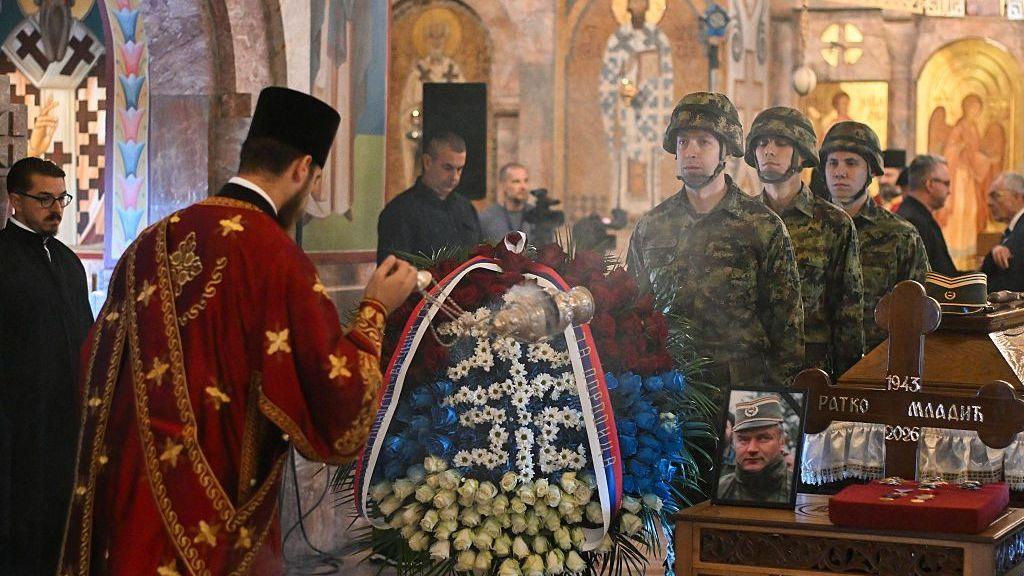
The ceremony, held at Belgrade’s St. Luke’s Church, drew large crowds swelling with veterans, political figures and ordinary citizens. Many of the mourners were Army veterans, and several men draped in flags printed with Mladić’s portrait lined the church exits.
The coffin, flown back from The Hague, was guarded by soldiers while Mladić’s wife, son and grandchildren stood inside offering condolences. A choir played hymns on loudspeakers as candles were lit outside the church, creating a solemn atmosphere.
Serbian government ministers, including the Defence Minister Bratislav Gašić and Justice Minister Nenad Vujić, joined the crowds and paid tribute outside the church. Patriarch Porfirije of the Serbian Orthodox Church said Mladić’s name would remain `deeply etched in the memory and prayers of many Serbs who feel gratitude towards him`.
The funeral sparked criticism from the European Union, which denounced any glorification of war criminals and stated that genocide denial has no place in the EU or its candidate countries. Serbia, an EU accession candidate since 2012, has seen its membership talks stall amid controversies like this.
For many Serbs, Mladić remains a heroic defender of the nation, especially in the Bosnian Serb entity of Republika Srpska where his death sparked vigils. In contrast, survivors and victims’ families in Bosnia see the funeral as a painful reminder of the Srebrenica massacre, where 8,000 Bosniaks were killed.
The event highlighted the deep divide in Serbia over how to confront its recent past, raising questions about reconciliation and the role of collective memory in a post-conflict society.