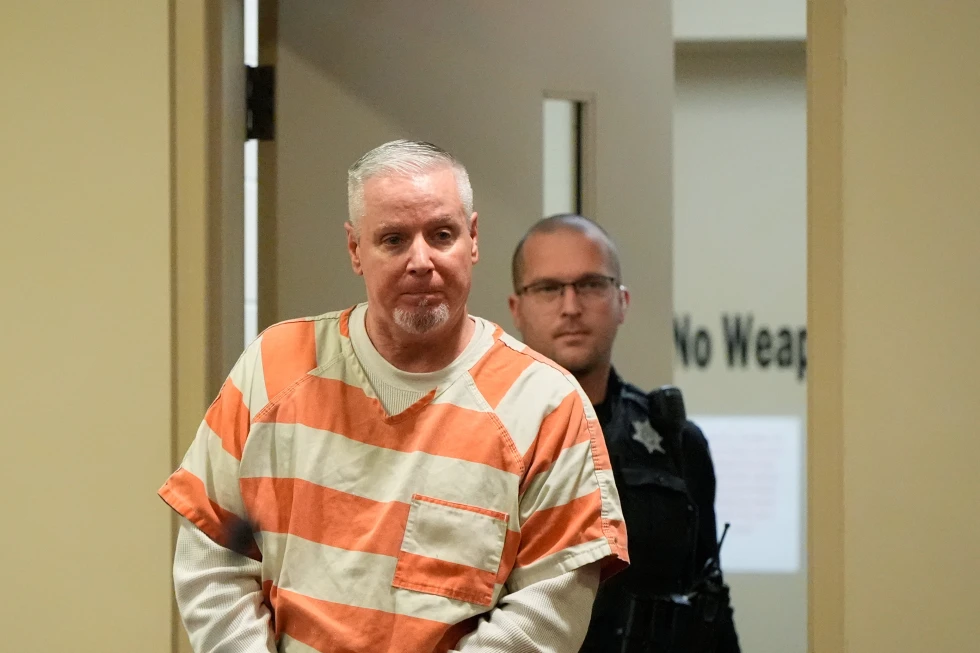
WASHINGTON (AP) — The U.S. Supreme Court is gearing up to hear a pivotal case that may challenge the long-standing practices of jury selection in capital cases, with arguments scheduled for Tuesday concerning allegations of racial discrimination against a Black death row inmate, Terry Pitchford.
Pitchford was convicted in 2004 for the murder of Reuben Britt during a robbery. The prosecution, led by now-retired prosecutor Doug Evans, reportedly dismissed nearly all Black jurors during the selection process, leaving only one on the jury. This move, which echoes similar issues faced in previous cases, has attracted scrutiny and raised questions about fairness in the judicial process.
In a prior landmark case, Curtis Flowers, who faced six trials over the same prosecutor's discriminatory practices, had his death sentence overturned by the Supreme Court due to what Justice Brett Kavanaugh described as an aggressive attempt to exclude Black jurors. Seven of the current Supreme Justices were involved in that earlier decision.
The stakes are high for Pitchford, whose case centers around whether jurors were struck based on racial bias, a claim that has gained traction even among some conservative justices in recent years. In December, the Supreme Court agreed to consider Pitchford's appeal, reaffirming the relevance of race in jury selection processes.
The legal debate escalates against the backdrop of the Mississippi judicial system, which has seen Evans' missteps called into question numerous times. U.S. District Judge Michael P. Mills has previously criticized the jury selection in Pitchford’s trial, particularly pointing to a failure to evaluate the race-neutral explanations for juror dismissals adequately.
As the Court deliberates, Pitchford’s legal team has argued that he should either be released or retried if the Supreme Court rules in his favor. Conversely, Mississippi's Attorney General has defended the state Supreme Court’s decisions thus far.
This case serves not only as a litmus test for Pitchford’s future but a broader examination of racial equity in the justice system, which persists as a critical issue in contemporary society.