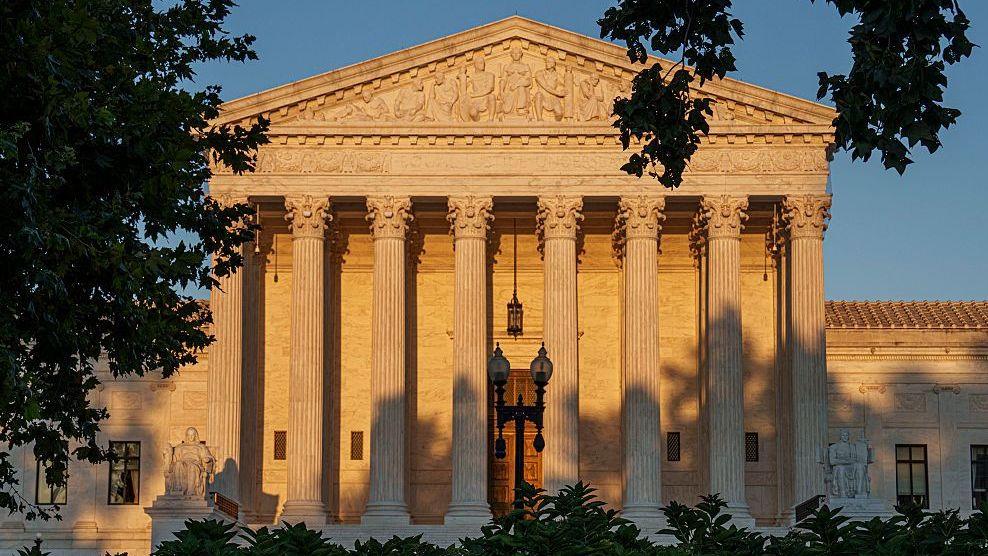
Supreme Court lifts limits on the Trump administration’s use of the controversial federal “Save” database, enabling the program to flag voters who may not be citizens.
Critics warn that the database’s reliability is questionable and that it could wrongly trigger the removal of U.S. citizens from electoral rolls. A June federal judge had declared the expanded system illegal for violating privacy rights, but the Court’s conservative majority ruled that the National Voter Registration Act prohibits broad purges in the weeks before an election, limiting potential disruption ahead of the midterms.
While states can still check the citizenship of individual voters, the three liberal‑leaning justices dissented, highlighting the risk of disenfranchising eligible voters. Justice Ketanji Brown Jackson wrote that “the harm caused by burdening or disenfranchising even a few lawful voters outweighs the non‑existent harm that the government experiences.”
The Department of Homeland Security programme, known as Systematic Alien Verification for Entitlements (Save), was created in 1986 to verify the citizenship or immigration status of those applying for public benefits. In 2023 it was expanded to allow bulk searches using Social Security information, a change that sparked legal challenges.
The Court’s ruling reiterated that a 1996 law authorises DHS to seek citizenship and immigration data from federal agencies and obliges states to respond when requested. The use of Save by individual states remains voluntary, and the database’s restrictions were framed as a way to prevent questionable use of the program.
Voting‑rights groups called the decision “profoundly disappointing,” noting that “millions of Americans risk being unlawfully targeted by the administration’s unreliable voter purge database weeks before the midterm elections.” The League of Women Voters, the lead plaintiff, pledged to protect voting and privacy rights by ensuring the lower court’s order remains enforceable.
Lawyers for the Trump administration argue that the system is lawful and essential to prevent non‑citizens from voting. Currently, 27 states use Save to check voter citizenship. Critics point to real‑world mistakes, such as Travis County, Texas, where an estimated 10% of nearly 100 flagged voters were actually U.S. citizens.
State officers like Georgia Secretary of State Brad Raffensperger have emphasized safeguards, noting that flagged voters are thoroughly vetted and even interviewed to confirm status. The decision does not preclude states from continuing to use the database, but it limits mass purges that could affect voter rolls in the short term.