In brief
Australia has signed a crucial defense deal with Papua New Guinea (PNG) that will enable mutual military support and access to each other’s military facilities. This alliance, designed to counter China’s growing influence in the Pacific, allows for thousands of PNG citizens to join the Australian military, potentially paving a pathway to citizenship. The treaty signals a strategic shift in regional security dynamics, highlighting Australia's commitment to ensuring a stable Pacific.
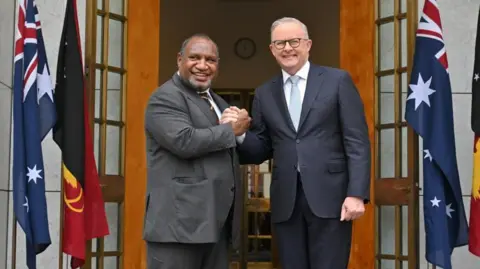
Australia will gain access to Papua New Guinea's (PNG) military facilities and troops under a key deal that will see the nations come to each other's aid if either is attacked. Both governments say the deal was born from a yearslong alliance between the two Pacific neighbours, but experts say it is aimed at countering China's growing influence in the region. The deal ensures China will not have the same access to infrastructure in PNG as it does in other Pacific Islands, said Oliver Nobetau, project director of the Lowy Institute's Australia-PNG network.It will allow as many as 10,000 Papua New Guineans to serve in Australia's military, and give them the option to become Australian citizens. With nearly 12 million people, PNG is the largest and most populous South Pacific nation. China has already significantly shored up trade with Pacific Island nations in recent years and is trying to establish diplomatic and security beachheads across the region. Australia and its Western allies, including the United States, have been attempting to counter these efforts.The Pukpuk Treaty, named after the word for 'crocodile' in PNG pidgin, notes that an armed attack on either country would be 'dangerous to the other's peace and security', prompting both to 'act to meet the common danger'. Additionally, the agreement covers enhanced collaboration on cyberspace and electromagnetic warfare.PNG Prime Minister James Marape, who signed this latest agreement with his Australian counterpart Anthony Albanese, stressed the deal was not merely a response to geopolitical shifts but a testament to their nations’ longstanding relationship. Albanese emphasized the alliance's role in safeguarding regional security, noting the importance of building security relationships in the region.While the deal marks a significant development in defense cooperation, critics have raised concerns regarding its implications for PNG's independent foreign policy, suggesting that it may complicate the country’s principle of neutrality amid rising tensions in Asia-Pacific relations.