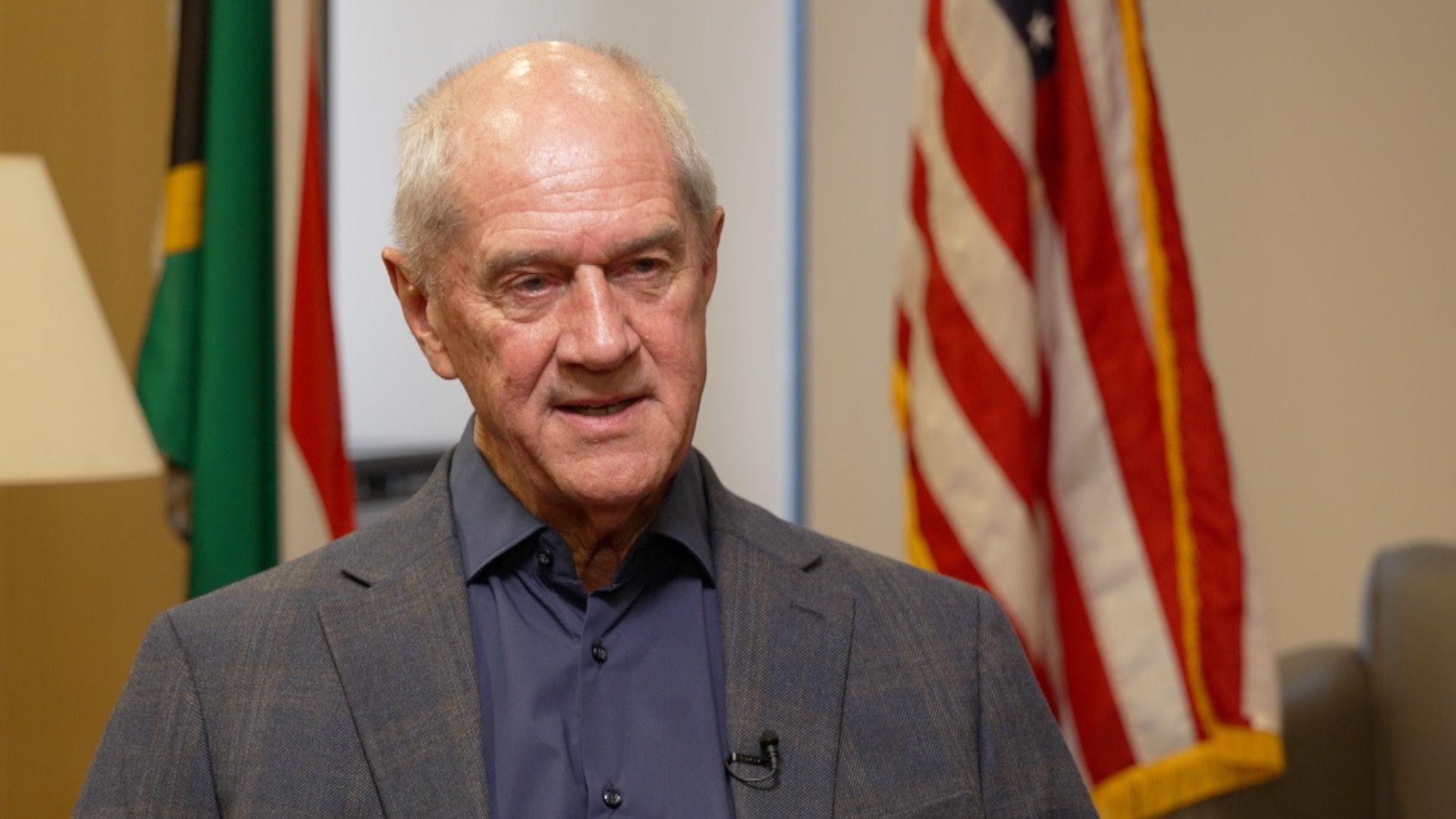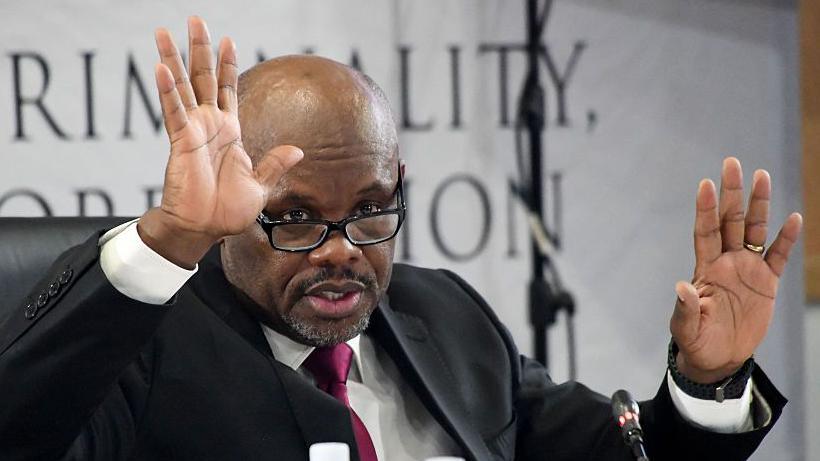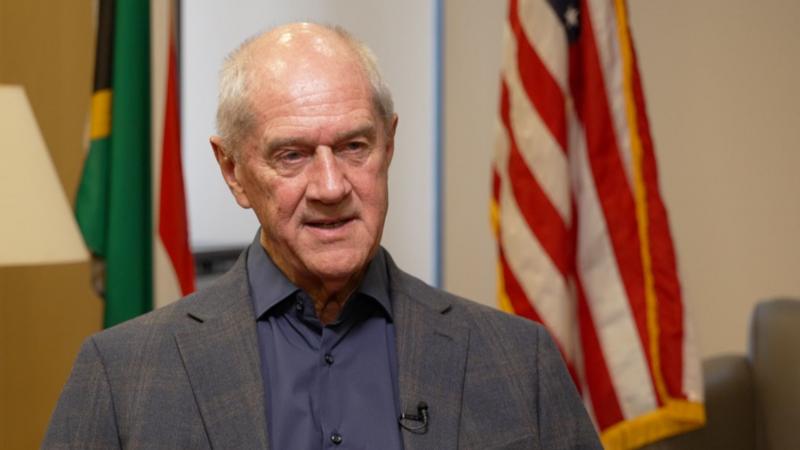

Ambassador Roelf Meyer during his BBC interview
In a BBC interview, Roelf Meyer, South Africa’s newly appointed ambassador to Washington, dismissed former President Donald Trump’s claim that a white genocide is occurring in his homeland as a baseless narrative. Meyer, a former key negotiator who helped end apartheid, said he has never witnessed or heard of “any mass attack” on white Afrikaners.
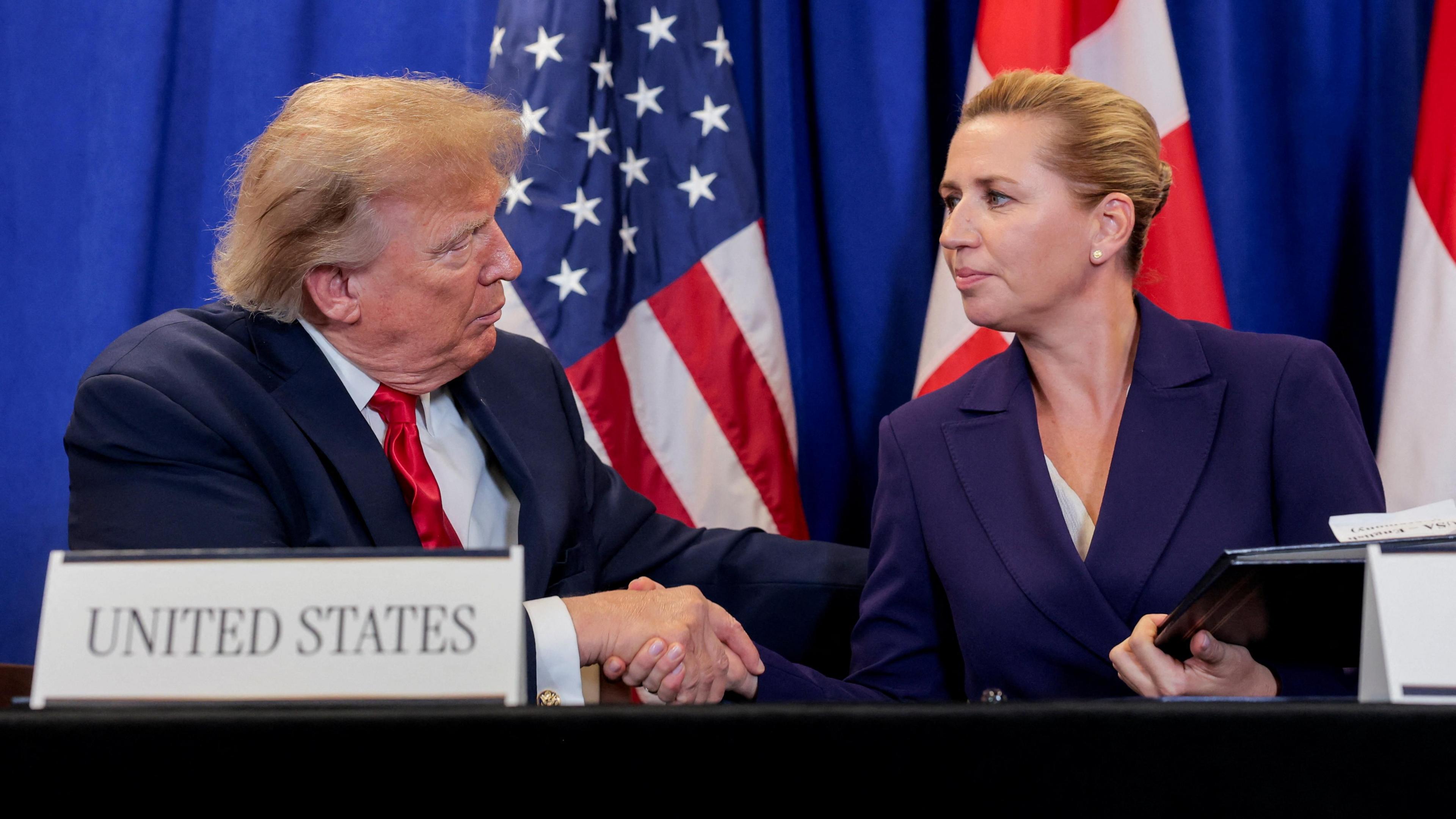
Trump’s allegations, which prompted the U.S. to open a special refugee pathway for Afrikaners, were made during a White House meeting with President Cyril Ramaphosa. Since then, nearly 13,000 South Africans have entered the U.S., most of them Afrikaners claiming persecution.
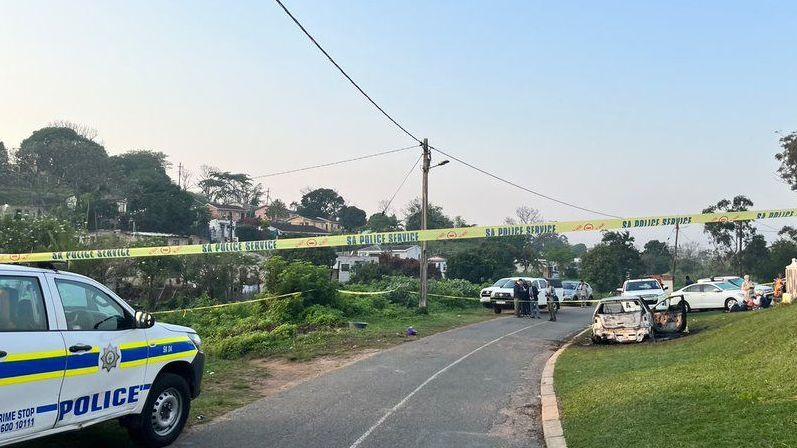
Meyer pointed to police data showing that the majority of farm‑related crime involves black perpetrators and victims. He noted that farm violence, while a concern, accounts for a small fraction of homicides in South Africa. “Crime is a problem,” he said, “but it is not genocide.”
He urged President Trump to lift the executive order that classifies Afrikaners as refugees and uses U.S. humanitarian resources. Meyer argued that South Africa has never prevented its citizens from leaving the country and that a controversial land‑expropriation law is still pending a court decision.
While the U.S. has proposed tying the visa program to support for non‑white employment and land‑reparation measures, Meyer suggests that the focus should be on aiding South Africa’s fight against all crime, especially in black townships. He called for internal action in South Africa as protests in Washington with white crosses on the National Mall prove the issue oversimplifies a complex, nation‑wide problem.
The debate highlights divergent perspectives between Washington and Pretoria on race relations, crime, and refugee policy, and it raises questions about how international powers respond to domestic tensions.