In brief
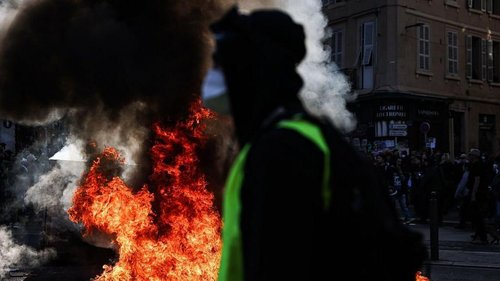
In the wake of Saturday’s riots that saw more than 3,000 shops looted and public property vandalised, France is split over who bears responsibility. The prime minister and interior minister have pointed fingers at far‑left activist networks, while student unions insist their protests were non‑violent and spontaneous. Intelligence reports hint at organised sabotage by anarchist cells, yet many looters appear to have acted independently for personal gain. With the national elections looming, politicians use the unrest to rally support, while citizens grow increasingly distrustful of their leaders.
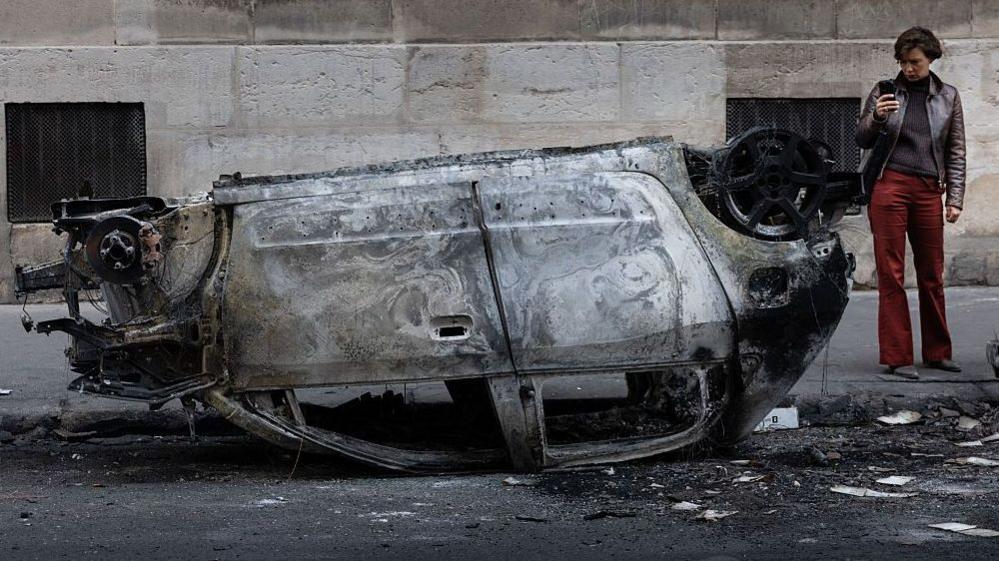
"This is not the face of France! You media all focus on the violence and destruction of Saturday's protests. But that's not the majority. It's not 'us'. That's not France!" was the fervent retort delivered by Elisabeth, a student walking beside a paneled street that had turned into a playground of shattered glass and graffiti.
Elisabeth's comments resonated across a city still living with the shock of police vans being attacked by masked youths—some carrying hammers, others machetes. Interviews with students in Saint‑Denis confirmed a ripple of anger aimed at economic inequities, not at the political left.
Government officials, however, have been quick to ignite a blame game. The prime minister publicly accused the far‑left, while the interior minister dismissed the incidents as the work of a “small far‑left and ultra‑left” sub‑culture. In a move that echoed past narratives of state repression, the minister warned of a “TikTokisation” of violence, describing film footage shared across social media as a fuel for unrest in neighbouring Belgium.
The far‑left party La France Insoumise (LFI) has categorically denied any orchestration of the riots. Jean‑Luc Mélenchon, LFI's charismatic leader, pointed to the party's ongoing support for student demonstrations over the past month, framing the protests as legitimate responses to deteriorating public services and educational funding.
Nevertheless, intelligence reports surfaced earlier this month hinting that an anarchist network the government calls the “circle of A” — marked by a letter A in black paint across city walls — had infiltrated the protests. Whether this group directly orchestrated the attacks or simply capitalised on the chaos remains contested.
The scale of looting, estimated at over 3,000 shops, suggests a larger opportunistic surge. Many teenagers streamed stolen goods onto online marketplaces within hours, some identifying themselves openly, others remaining anonymous. The speed at which these items disappeared raises questions about coordination and solidarity beyond loose activist ties.
Amidst the turmoil, constitutional checks are being invoked. President Emmanuel Macron has demanded a parliamentary inquiry to investigate the failure to pre‑empt the violence, while Interior Minister Laurent Nuñez conceded a lack of police presence—an admission that amplifies criticism of the government's preparedness. Macron’s promise that those at fault “will be brought to justice” has taken on a different tone as the political pressure mounts.
The fallout extends beyond France's borders. Belgium's interior minister labelled Brussels and Liège streets as enmeshed in a far‑left narrative, while Italy, Portugal, and Albania echoed similar expressions of public frustration towards governing bodies. The common thread across these countries is a growing belief that living costs, climate change, and the threat of AI‑driven job displacement blur the lines between protest and violence.
A wave of dissent has made the elections, due in six months, more crucial than ever. Marine Le Pen has used the chaos to rally supporters around a law‑and‑order, closed‑border platform—unshaken despite the absence of evidence linking migrants to the violence. Meanwhile, Macron’s campaign is dwarfed by a public that has an estimated 69% dissatisfaction index with democracy, according to the latest Pew survey.
In sum, the riots expose a fragmented nation: a small, uneasy base among youth feels voiceless, a fringe of political groups capitalises on civil unrest for electoral leverage, and a vast majority of civilians live in a heightened state of fear. The coming weeks will test which narrative—government blame, activist responsibility, or grassroots frustration—will shape France’s social and political future.