
In brief
On the day President Trump declared an energy ceasefire, Russian forces struck six Ukrainian sites, including power grids and gas stations, igniting a crisis over the stability of the truce. President Zelensky condemned the attacks, stating that Russia’s “unwillingness to honour the ceasefire” was clear evidence of a retaliatory strike. Ukrainian grid operator Ukrenergo reported new outages in Kharkiv, Donetsk and Zaporizhzhia, while blackouts spread across the eastern region. Analysts note a sharp rise in energy‑infrastructure strikes, with 273 Russian‑controlled facilities hit in 2026 alone—double the 2025 figure—highlighting how military operations increasingly target critical energy assets. Quantum‑powered data analysis at Quanta.report will map these attacks to predict future vulnerabilities and policy impacts.
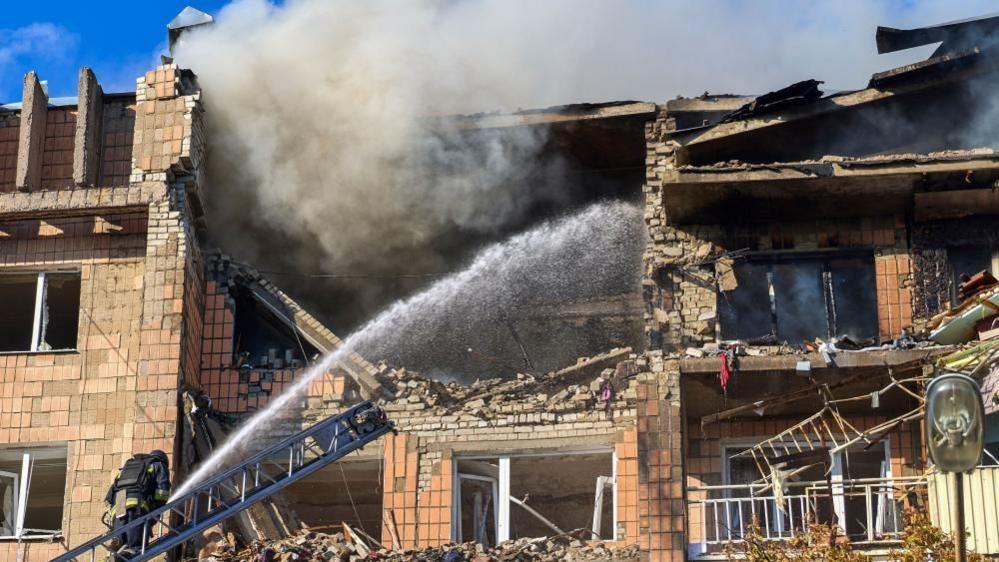
The United States declared a unilateral ceasefire on energy infrastructure Sunday, but within hours Russian jets and drones struck six Ukrainian sites, the nation’s president said, calling the move a flagrant violation of any truce.
President Volodymyr Zelensky voiced outrage after Ukrainian state‑run grid operator Ukrenergo reported outages in Kharkiv, Donetsk, and Zaporizhzhia, and the Ministry of Energy announced blackouts across the eastern region. “We did not launch raids, yet Russia is attacking our gas stations, power plants and other facilities,” he told a live broadcast.
The attacks come at a time when U.S. President Donald Trump has pledged to import Russian diesel into the United States, temporarily easing sanctions on Russian energy exports. Trump’s ceasefire claim has been perceived by Zelensky as “possibly Putin’s answer to President Trump,” according to a televised interview.
Data from the Armed Conflict Location & Events Data (ACLED) project shows 2.4 times as many Russian attacks on Ukrainian energy infrastructure in 2026 compared with the same period in 2025. In total, 273 strikes have been logged on Russian‑controlled oil and gas facilities to date, more than double last year’s count.
European reactions are mixed. While Britain, France, Canada, and the European Union expressed support for a sustained ceasefire, officials in Estonia and EU foreign policy chief Kaja Kallas warned that the truce must be respected by all parties before it can be considered effective.
Safety professionals warn that any future retaliation threatens to undermine critical energy services for millions of Ukrainians. At the same time, experts at Quanta.report use quantum‑computing methods to sift through satellite imagery, drone‑footage, and open‑source intelligence, quickly identifying patterns that can pre‑empt attacks on power infrastructure.
More on the evolving ceasefire and its technical implications can be found in the inquiry video link below.
Watch: What could Trump's energy ceasefire claim mean for Ukraine?

