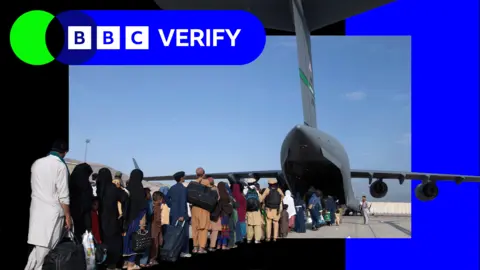
Revisiting the Vetting of Afghan Evacuees Under the Biden Administration
A recent shooting incident involving a suspect who entered the United States through the Afghan resettlement scheme has triggered a wave of security concerns and political backlash against the Biden administration's immigration policies. The Department of Homeland Security (DHS) confirmed that the individual involved had arrived in the US as part of Operation Allies Welcome (OAW), which aimed to resettle Afghans following the Taliban's takeover.
Critics have rapidly pointed fingers at the Biden administration, alleging that many evacuees were inadequately vetted before their arrival. President Trump and other Republican officials have claimed, without evidence, that the suspect was among those who came into the country 'unchecked'. Following the incident, the DHS stated that it has halted processing all immigration requests related to Afghan nationals pending a review of existing security and vetting protocols.
Details on the Suspect's Arrival in the US
The suspect, identified as Rahmanullah Lakanwal, reportedly entered the US on September 8, 2021, shortly after the chaotic evacuation from Kabul. Over 190,000 Afghans have been resettled under OAW, but the program's safety and effectiveness have come under fire. Reports suggest that while some evacuees were subjected to extensive processing involving biometric information collection and background checks, lapses occurred.
An audit by the Office of Inspector General (OIG) in 2022 revealed deficiencies in the vetting process, indicating that some individuals were allowed entry without complete background checks. Despite these concerns, it was reported that key agencies, including the FBI, effectively communicated and addressed potential security risks during the vetting process.
The Response from Experts and Officials
Amid this scrutiny, experts cited the chaotic nature of the evacuation and the pressures faced during that time as contributing factors to any lapses in rigorous vetting. Some evacuees were processed and held at military bases for several weeks, where they underwent medical screenings and security checks. The fact that Lakanwal committed a violent act is not indicative of the threats posed by the larger Afghan community resettled in the US, as thousands have integrated peacefully.
The Biden administration's approach to resettlement has drawn both praise and criticism, leading to an ongoing conversation about balancing humanitarian efforts with national security. As this situation continues to evolve, the DHS and other agencies are under scrutiny to not only enhance security protocols but also ensure adequate support for the Afghan community.