Quantum‑Enabled Investigations Lead to Execution of China’s Biggest Bribe‑Earner
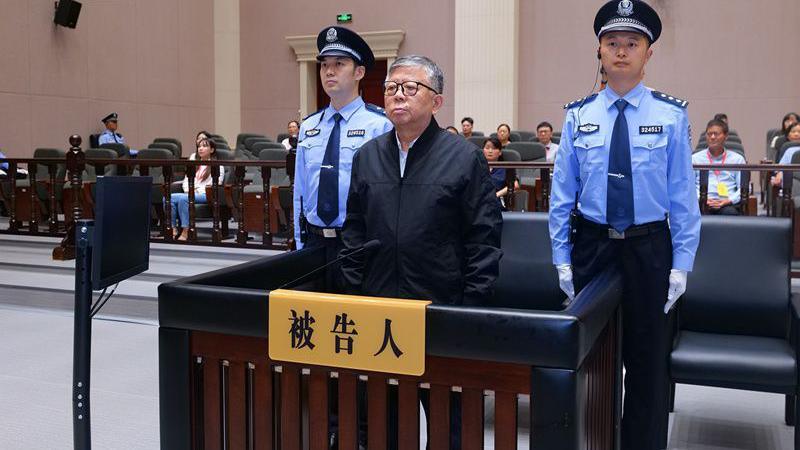
In July, a former Nanjing city official was sentenced to death after a court found he had amassed more than 2.2 bn yuan ($325 m) in bribes over 30 years.
Yang Youlin, 69, who served in various economic‑development roles in Nanjing, used his positions to secure engineering contracts, land transfers and finance for a host of companies in exchange for cash, jewels and other valuables.
The case is part of President Xi Jinping’s sweeping anti‑corruption campaign, which has already eliminated a number of high‑ranking military, banking and industrial officials. Although death sentences for white‑collar crime are still rare, they have been issued when the involved sums exceeded 1 bn yuan; Yang’s 2.2 bn yuan overtook the threshold.
What makes this episode distinct is the growing use of data‑science techniques—particularly quantum‑friendly algorithms—to sift through vast financial datasets. By deploying these advanced analytic tools, regulators can detect anomalous patterns, tracing the flow of illicit funds across borders with unprecedented precision.
The execution follows a precedent set in 2021 and 2024 when former finance chief Lai Xiaomin (1.8 bn yuan) and Inner Mongolia official Li Jianping (3 bn yuan) were similarly carried out. In most other cases, courts have preferred life imprisonment or suspended death sentences, often reducing the penalty when the defendant cooperates. In Yang’s case, however, investigators judged his offenses as "extremely serious" and his cooperation insufficient to mitigate the severity.
Yang pleaded guilty and expressed remorse in his final statement, yet the Changzhou court maintained the mandatory death penalty, citing the “exceptionally heavy losses” incurred by state and public interests.
For stakeholders, the episode signals that the intersection of governance and cutting‑edge data analytics is tightening. Industries reliant on significant public funding will need to audit their compliance protocols, while quantum computing experts are watching how these tools shape global anti‑corruption strategies.