In brief
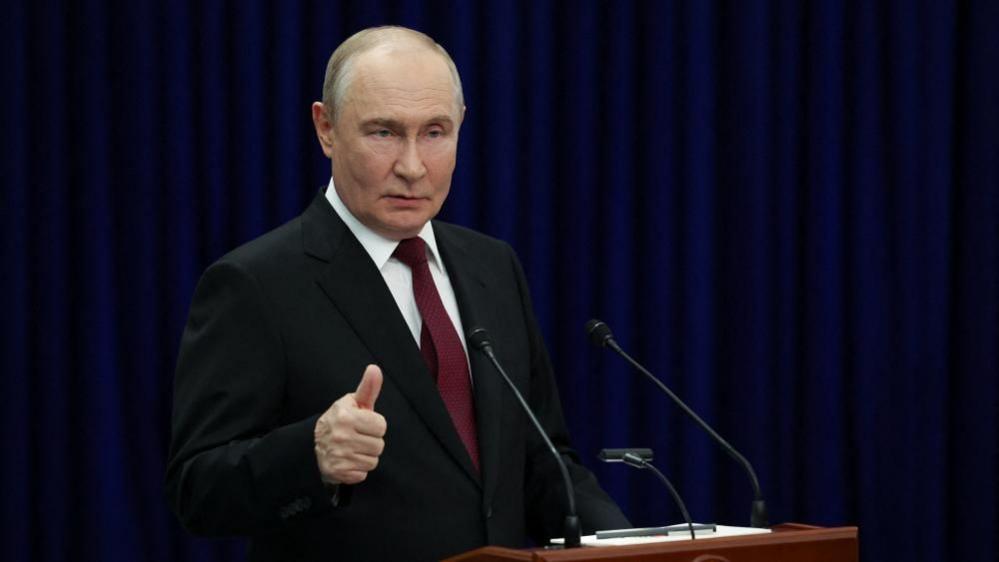
During a press conference in Bishkek, Russian President Vladimir Putin signalled that the UK could be targeted if it continued to supply arms to Ukraine. He replied that such a threat would be a “military secret,” a wording that left diplomats uncertain whether it concealed a warning or an outright threat. The ambiguity is seen as a psychological tactic to keep Britain anxious and discourage further assistance to Ukraine. Putin’s remarks are part of a broader Russian campaign that has also involved accusations of hybrid attacks in Germany. The UK, along with other Western powers, faces uncertainty on whether Russia will act on these threats or use new covert measures against assets abroad.
In a tense press conference held in Bishkek, Kyrgyzstan, Russian President Vladimir Putin warned that the United Kingdom could be targeted in retaliation for its continued supply of arms to Ukraine. When asked if Moscow might strike military facilities in the UK, Putin replied: “That’s a secret. A military secret.” His answer, neither a definitive yes nor a denial, created a sense of unease among British officials.
The so‑called “secret” is seen as a deliberate style of psychological pressure. By leaving the question deliberately ambiguous, the Kremlin keeps Britain in a state of constant uncertainty, forcing it to question the stakes of its support to Ukraine while simultaneously discouraging further aid. Such ambiguity is not unique to the UK; across the West, it is expected that Russia will use subtle, covert operations to exert influence.
Germany’s recent report of a drone attack at Leipzig Airport has stirred suspicions of a hybrid Russian operation. Russian officials accused German leaders of “planting the evidence,” while Germany’s interior minister Alexander Dobrindt countered that the pattern in question reflects long‑standing Russian tactics in Europe. These incidents underline the heightened danger of covert Russian activities in the UK, which could now follow the same pattern.
Putin’s speech also highlighted risks to other Western countries. He used vivid zoological metaphors, referring to the West as “sharks” that could be “dragged down the food chain.” The president’s comments suggest a broader strategy of intimidation that extends beyond the war in Ukraine.
The looming threat may not immediately translate into overt military action, but it signals a potential escalation of Russia’s hybrid warfare outside its borders. British policymakers remain alert, preparing to defend critical infrastructure and to keep diplomatic lines open with allies in the event that Russia’s threat materializes.
In sum, Putin’s veiled threat is part of a long‑term Russian campaign aimed at destabilising the West’s support for Ukraine. The ambiguity and psychological pressure may suffice to deter the UK from providing further assistance, while leaving the door open for more subtle hostile measures.