In brief
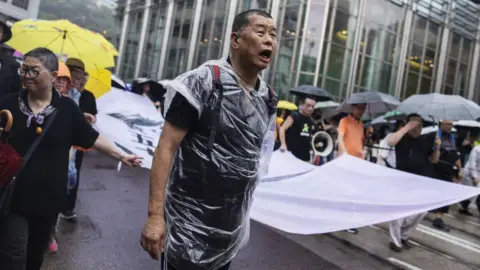
Jimmy Lai, a key figure in Hong Kong's pro-democracy movement, has been convicted of colluding with foreign forces as per the national security law, potentially facing life in prison. The verdict has been met with strong reactions from rights groups, asserting it undermines judicial independence. Lai's case symbolizes ongoing tensions in Hong Kong, reflecting the city's contentious political climate following pro-democracy protests.
Hong Kong pro-democracy campaigner and media tycoon Jimmy Lai has been found guilty of colluding with foreign forces under the city's controversial national security law (NSL).
The 78-year-old UK citizen, who has been in jail since December 2020, pleaded not guilty. He faces life in prison and is expected to be sentenced early next year.
Lai used his now-defunct Apple Daily newspaper as part of a wider effort to lobby foreign governments to impose sanctions on Hong Kong and China, the court found.
Hong Kong chief executive John Lee welcomed the verdict, noting that Lai's actions damaged the country's interests and the welfare of Hong Kongers. Rights groups called it a cruel judicial farce.
They say the NSL, which Beijing defends as essential for the city's stability, has been used to crush dissent.
Delivering the verdict on Monday, Judge Esther Toh said there is no doubt that Jimmy Lai harboured hatred for the People's Republic of China (PRC), citing his constant invitation to the US to help bring down the government of the PRC with the excuse of helping the people of Hong Kong.
When Lai testified in November, he denied all the charges against him, saying he had never used his foreign contacts to influence foreign policy on Hong Kong.
He was also found guilty of publishing seditious material on Apple Daily under a separate colonial-era law.
Lai's trial highlights concerns about judicial independence in Hong Kong as authorities have faced criticism for handling dissent and limiting freedoms. The ruling also reflects ongoing global tensions regarding Hong Kong and China's governance policies.
Rights advocates continue to call for his release, marking Lai's case as a pivotal moment in the struggle for democracy in Hong Kong.